Heraldic Tinctures
In heraldry, tinctures (also called colours, metals, or furs) are the surface treatments applied to the shield and its charges. Together with the metals and furs, the colours form the basic visual language of heraldry. Furs are comparatively rare in Hungarian heraldry, though they are common in Western European armory.
Tinctures
Tincture is the collective heraldic term for metals, colours, and furs. Older heraldic literature frequently used the Latin-derived term tinctura for all heraldic colourings.
Colours
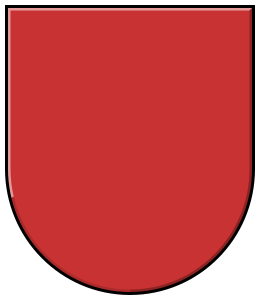
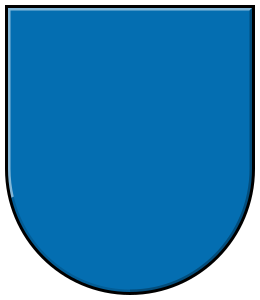
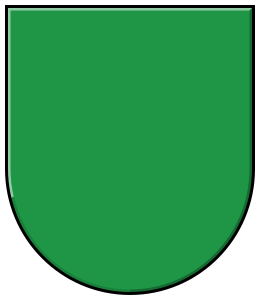
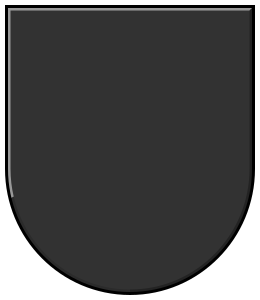
During the earliest period of heraldry, often called living heraldry, only four principal colours were commonly employed:
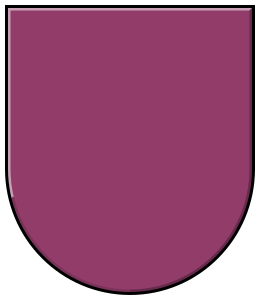
Purple (purpure) entered heraldic use somewhat later, although still at an early date. It was generally reserved for secondary heraldic elements such as mantlings, pavilion linings, ecclesiastical hats, and other external ornaments rather than the shield itself.
Later Colours
Over time, additional colours appeared beyond the original heraldic tinctures. Since they were not used during the formative military period of heraldry, they are usually regarded as non-heraldic or anti-heraldic colours.
These later additions eventually received their own systems of hatching. The development of these systems is commonly attributed to Marcus Vulson de la Colombière, while further non-heraldic colours were introduced by Eucharius Gottlieb Rink and Christian Samuel Theodor Bernd.
Examples include:
- Orange
- Blood-red or dark red
- Brown
- Grey
- Natural colour (proper)
- Sky blue
- Dark grey
- Ash grey
- Stone colour
- Aquamarine
- Copper
- Pink
- Ochre
- Bronze
- Steel grey
The use of these colours varies greatly between heraldic traditions.
The natural colour (proper) most often refers to the natural flesh colour of a European human figure and is particularly common in French heraldry.
German heraldry occasionally employs grey, steel blue, water-colour, and earth-colour. Portuguese heraldry distinguishes white from silver in rare cases. Canadian heraldry introduced pink and copper in 1997. South African heraldry uses ochre, while modern military heraldry in the United States has introduced bronze, buff, and steel-grey tones.
Many of these non-heraldic colours already appeared in grants of arms issued during the period of declining heraldry. In Hungarian armory, sky-blue fields occur in several seventeenth-century grants of arms, demonstrating that practice often diverged from strict heraldic theory.
Metals
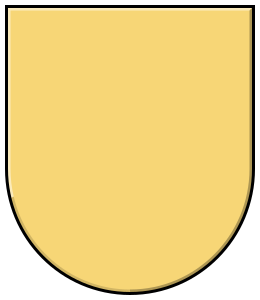
Gold (Yellow)
In early armorial manuscripts, gold areas were frequently executed with genuine gold leaf. Over the centuries these surfaces often wore away or tarnished, occasionally leading later observers to mistake them for brown or bronze pigments.
In ordinary representations, gold is commonly replaced by yellow. Although heraldic theory generally treats gold and yellow as equivalent, some historical examples distinguish between the two.
Gold was traditionally associated with the Sun in medieval and Renaissance symbolic systems. For this reason heraldic writers occasionally linked gold with solar qualities such as majesty, splendour, and constancy.
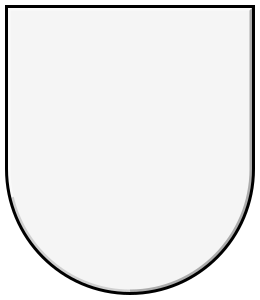
Silver (White)
In original armorial manuscripts, silver was often represented by actual silver leaf. As silver oxidises, it gradually darkens and may eventually appear grey or black.
This ageing process has frequently caused errors in the interpretation of historical heraldic artwork. For example, some medieval depictions of red-and-silver striped Hungarian banners have been mistakenly reconstructed as red-and-black because the original silver pigment had darkened.
In ordinary representations, silver may be replaced by white. In a few heraldic traditions, especially Portuguese heraldry, white occasionally appears as a tincture distinct from silver.
Furs
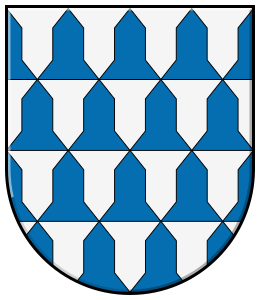
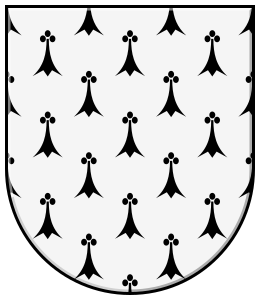
The principal heraldic furs are vair, ermine, and their numerous variants. They occur only rarely in Hungarian heraldry but are common in French, British, and other Western European traditions.
Unlike colours and metals, furs may be used both for fields and for charges. They may also be combined with one another.
Occasionally sable fur and marten fur appear as additional heraldic furs. Sable fur shares the colour and hatching of black, while marten fur resembles red. German heraldry also makes use of Kürsch and several other specialised fur patterns.
Hatching Systems
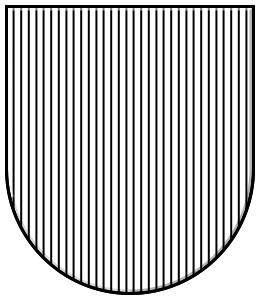
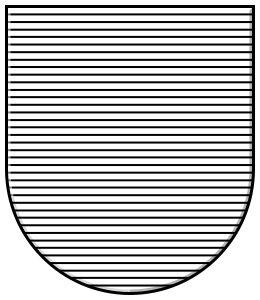
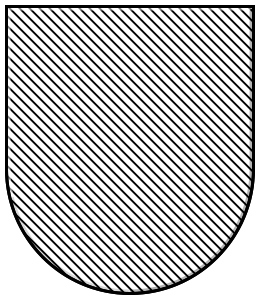
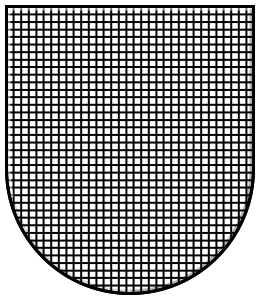
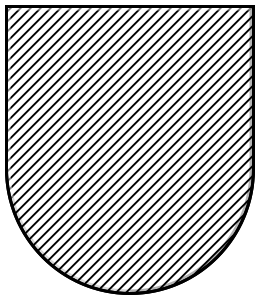
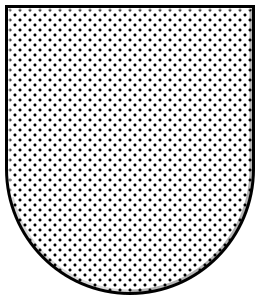
In black-and-white illustrations, seals, engravings, coins, and printed works, heraldic tinctures are represented by standardised hatching systems.
The system most commonly used today was developed during the seventeenth century and allows colours and metals to be identified without the use of pigment.
The Rule of Tincture
The fundamental rule of heraldry states that metal should not be placed upon metal, nor colour upon colour.
This principle emerged during the earliest period of heraldry, when shields typically consisted of only one metal and one colour. The strong visual contrast between light metals and darker colours ensured that a knight could be easily recognised on the battlefield.
Another explanation is practical: medieval artists found it difficult to apply one colour effectively over another or one metal over another.
The rule does not apply to furs. A fur may therefore be placed upon a metal, a colour, or another fur without violating heraldic practice.
Arms that violate the rule are traditionally called armes à enquérir or anti-heraldic arms. Nevertheless, a number of famous exceptions exist. The best-known example is the arms of the Kingdom of Jerusalem, which display a gold cross upon a silver field.
Western and Hungarian Practice
In Western European heraldry, the rule of tincture became one of the most important principles of heraldic design and was generally observed with considerable strictness. The highly stylised nature of French and English heraldry reinforced the preference for a limited number of pure colours and strong contrasts.
Hungarian heraldry developed somewhat differently. Although the rule of tincture was known and often followed, medieval and early modern Hungarian armory frequently showed a greater preference for naturalistic representation. Human figures, animals, clothing, weapons, and landscape elements were often depicted in their natural colours rather than in strictly heraldic tinctures.
As a result, colour-on-colour combinations appear more frequently in Hungarian grants of arms than in many Western European traditions. These combinations were usually accepted because the realistic depiction of the charge was considered more important than strict adherence to heraldic theory.
This tendency became especially pronounced in the sixteenth and seventeenth centuries, when Hungarian coats of arms increasingly incorporated detailed battle scenes, severed Turkish heads, naturalistic animals, and richly coloured clothing. Consequently, Hungarian heraldry is often regarded as one of the more pictorial and less rigidly stylised branches of European heraldry.
A second heraldic principle states that only one shade of a given tincture should appear within the same field. Thus, multiple shades of blue or red should not normally be combined on a single heraldic surface.
A more permissive interpretation allows different fields of a composite coat of arms to employ different shades of the same tincture, since composite arms originated from the combination of formerly independent coats of arms.
Christian Maximilian Spener described the rule of tincture as an axiomatic principle of heraldry and cited earlier heraldic authorities in support of its universal validity.