Ermine
Ermine in Heraldry
Ermine is one of the two principal heraldic furs, alongside vair. It is traditionally derived from the winter coat of the stoat (Mustela erminea), whose white fur and distinctive black tail tip became enduring symbols of rank, dignity, and nobility.
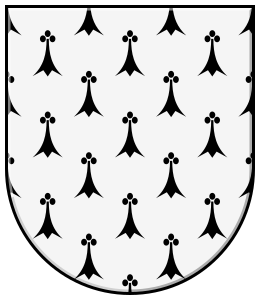
In heraldry, ermine is depicted as a white (argent) field semé of stylized black ermine spots. Medieval heralds did not classify furs as either colours or metals; instead, they were regarded as a separate category and could therefore be combined freely with both without violating the rule of tincture.
Ermine became particularly widespread in French, English, and Netherlandish heraldry. It appears less frequently in Central European heraldic traditions but became one of the most recognizable fur patterns in Western Europe.
Etymology and Terminology
The English heraldic term ermine derives from the Old French hermine, which in turn traces back to medieval Latin forms referring to the animal and its prized fur.
Medieval sources occasionally associated the fur with Armenia (pelles Armeniae – “Armenian skins”), reflecting the importance of the fur trade rather than the actual geographic origin of the animal. Although this etymology is no longer generally accepted, it appears in numerous historical texts.
Ermine in Dress and Ceremonial Costume
Ermine was among the most valuable and prestigious furs of the Middle Ages. Because of its rarity, brilliant white winter coat, and association with wealth, it was reserved primarily for monarchs, high nobility, and senior ecclesiastical figures.
Royal and ducal robes were often lined with ermine, particularly in France and England, where it became a visible symbol of authority and social status. The heraldic representation of ermine is generally believed to have originated from the stylized depiction of these luxurious fur linings.
Rather than reproducing entire animal pelts, heraldic artists developed a decorative pattern based on the black tail tips that remained visible when the skins were sewn together into ceremonial garments.
Symbolism
During the period of so-called “dead heraldry,” later heraldic writers attached various symbolic meanings to ermine. It became associated with purity, honour, dignity, and high rank.
Philipp Jakob Spener records that the medieval herald known as Heraldus Britannus referred to ermine using the term albus, emphasizing its white appearance and its association with noble virtue.
Like many heraldic colour symbolisms, these interpretations were largely later inventions rather than principles of early medieval heraldry.
Ermine in Heraldic Practice
Ermine may cover an entire shield field, but it is also used on charges, mantling, heraldic pavilions, robes of state, and other decorative elements.
The classic form consists of black ermine spots on a white field, but several variants developed over time. The best known include ermines (white spots on a black field), erminois (gold field with black spots), and pean (black field with gold spots).
In French and English heraldry, ermine became the most common heraldic fur and appears in numerous royal, noble, and ecclesiastical coats of arms. In the British heraldic tradition, it remains closely associated with coronation robes, peerage insignia, and symbols of high rank.
Ermine in heraldry is more than a stylized representation of an animal fur. Over the centuries it became one of the most recognizable symbols of dignity, authority, and noble status, making it one of the most important and enduring heraldic furs.