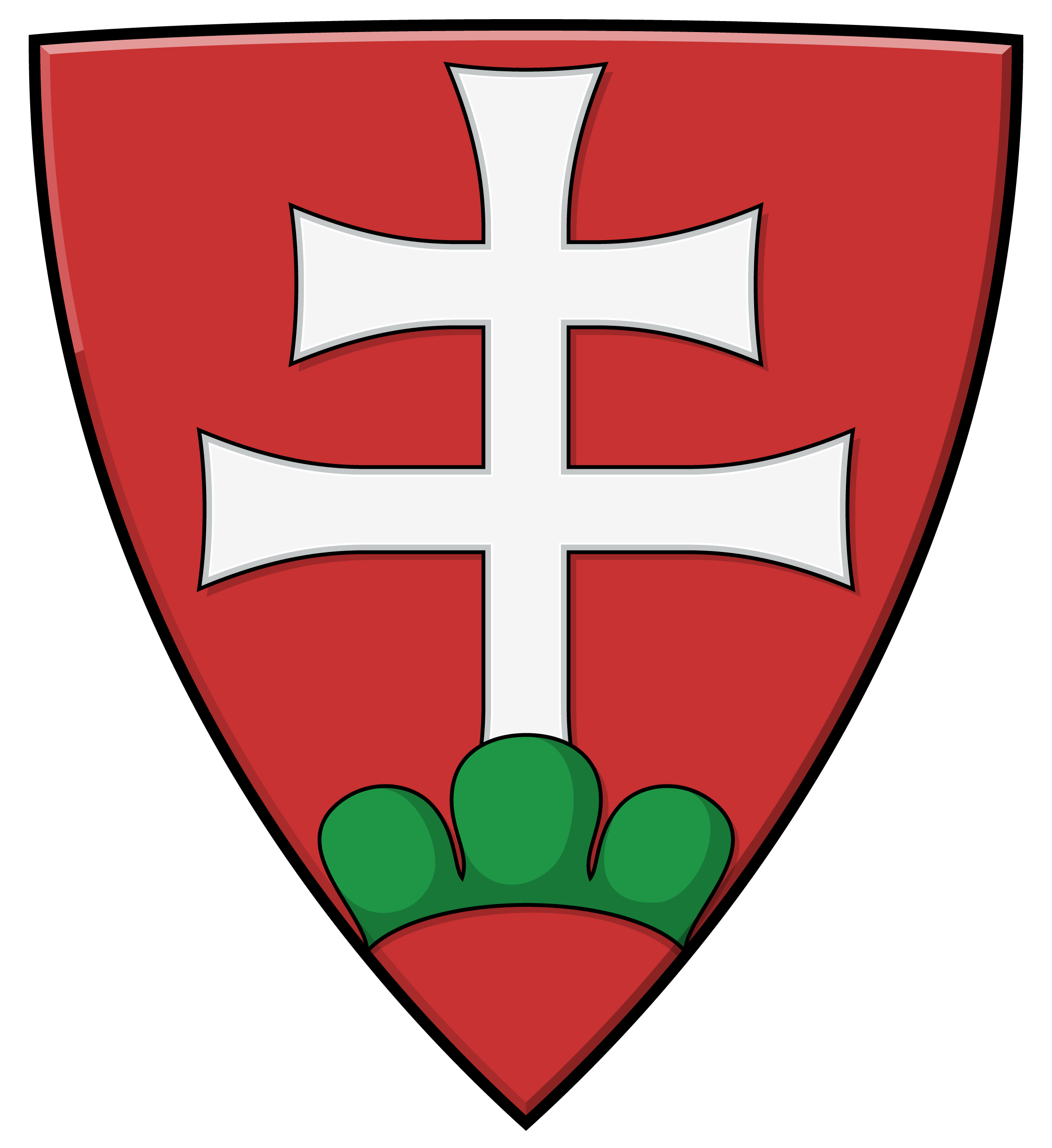
Coat of arms of King Wenceslaus of Hungary
Name:
Epithet:
Country:
Title:
Dynasty:
Reign:
Wenceslaus (Vencel)
Wenceslaus (1289 – 4 August 1306), a Czech king from the Přemyslid dynasty, was for a short time both claimant to and ruler of the Hungarian throne. After the extinction of the Árpád dynasty in 1301, several European dynasties competed for the crown of medieval Hungary, bringing the young Czech prince to prominence. Although he was crowned with the Holy Crown of Hungary, his actual power remained limited, and his reign proved to be only a transitional episode in Hungarian history.
The coat of arms has been redrawn on the basis of his seal.
Origin and Dynastic Connections
Wenceslaus was the son of King Wenceslaus II of Bohemia and Princess Kunigunde of Poland, which gave him significant dynastic ties throughout Central Europe. By the late 13th century, the Přemyslid dynasty had built up strong power in Bohemia and Silesia and exercised influence in Poland as well. His claim to the Hungarian throne could also be supported through his maternal lineage, as he was related to the Árpád dynasty.
When King Andrew III died in 1301, the male line of the Árpád dynasty became extinct, opening the way for rival claims by various European dynasties. The Hungarian nobility was divided: some supported Charles Robert of Anjou, others backed Otto of Bavaria, while many regarded Wenceslaus as the most suitable candidate.
Coronation as King of Hungary of Wenceslaus
The young prince—who had been betrothed in childhood to Elizabeth, the daughter of King Andrew III—was invited to Hungary. Part of the nobility hoped that he would become a king with strong dynastic backing who would nevertheless respect Hungarian interests.
On 27 August 1301, he was crowned king at Székesfehérvár with the Holy Crown of Hungary and adopted the name “Ladislaus” (as Ladislaus V). This choice of name was intended to align him more closely with Hungarian traditions and to strengthen his legitimacy.
His Position of Power and Difficulties
Although formally king of Hungary, Wenceslaus’s rule was in reality very limited. Powerful oligarchs such as Matthew Csák and Amadeus Aba exercised authority independently and acknowledged royal power only nominally. The papacy also refused to support Wenceslaus, preferring instead Charles Robert of the House of Anjou as king of Hungary.
Because of his young age, lack of experience, and the internal divisions among the Hungarian nobility, he was unable to consolidate his authority. Although his father, King Wenceslaus II of Bohemia, provided military support, the Hungarian political base was too weak to sustain long-term rule.
Abdication and the Transfer of the Crown
In 1304, the Czech king recalled his son, as political developments in Germany and Poland required his presence. Wenceslaus therefore left Hungary, taking the Holy Crown with him. This caused a serious diplomatic conflict, since the crown was the most important symbol of legitimate rule in the Kingdom of Hungary.
In 1305, after the death of his father, Wenceslaus became King of Bohemia as Wenceslaus III. At that time, he formally renounced his claim to the Hungarian throne and handed over the crown to Otto of Bavaria, who was also elected king by part of the Hungarian nobility. This act definitively ended Wenceslaus’s involvement in Hungarian affairs.
His Short Reign in Bohemia and Death
During his brief reign as king of Bohemia, Wenceslaus III likewise failed to secure his power. With his death, the male line of the Přemyslid dynasty came to an end: in 1306, at only seventeen years of age, he was assassinated in Olomouc (Olmütz). His death triggered a new succession crisis not only in Bohemia but throughout Central Europe.
Assessment and Historical Significance
Although his reign was short and unsuccessful, Wenceslaus remains an important episode in the history of medieval Hungary. His coronation demonstrated that after the extinction of the Árpád dynasty, the fate of the Hungarian throne became the subject of rivalry among European dynasties. Despite his strong dynastic background, his rule failed to take root within the Hungarian political system.
His death symbolically marked the end of the Přemyslid dynasty’s role in Hungary and Central Europe. The succession struggle ultimately concluded with the victory of Charles Robert of Anjou, who succeeded in strengthening royal authority in Hungary over the long term.
Az eredeti kép forrása: Internet
A szöveg forrása: ChatGPT

The visual content of this website may be freely used under the terms of the Creative Commons 4.0 license, provided that the source is clearly indicated and the attribution includes a full, clickable link to https://cimerek.hu or to the exact web address of the specific content.