Historical coat of arms of Transylvania
Country:
Coat of arms type:
Grantor:
Year:
Made by:
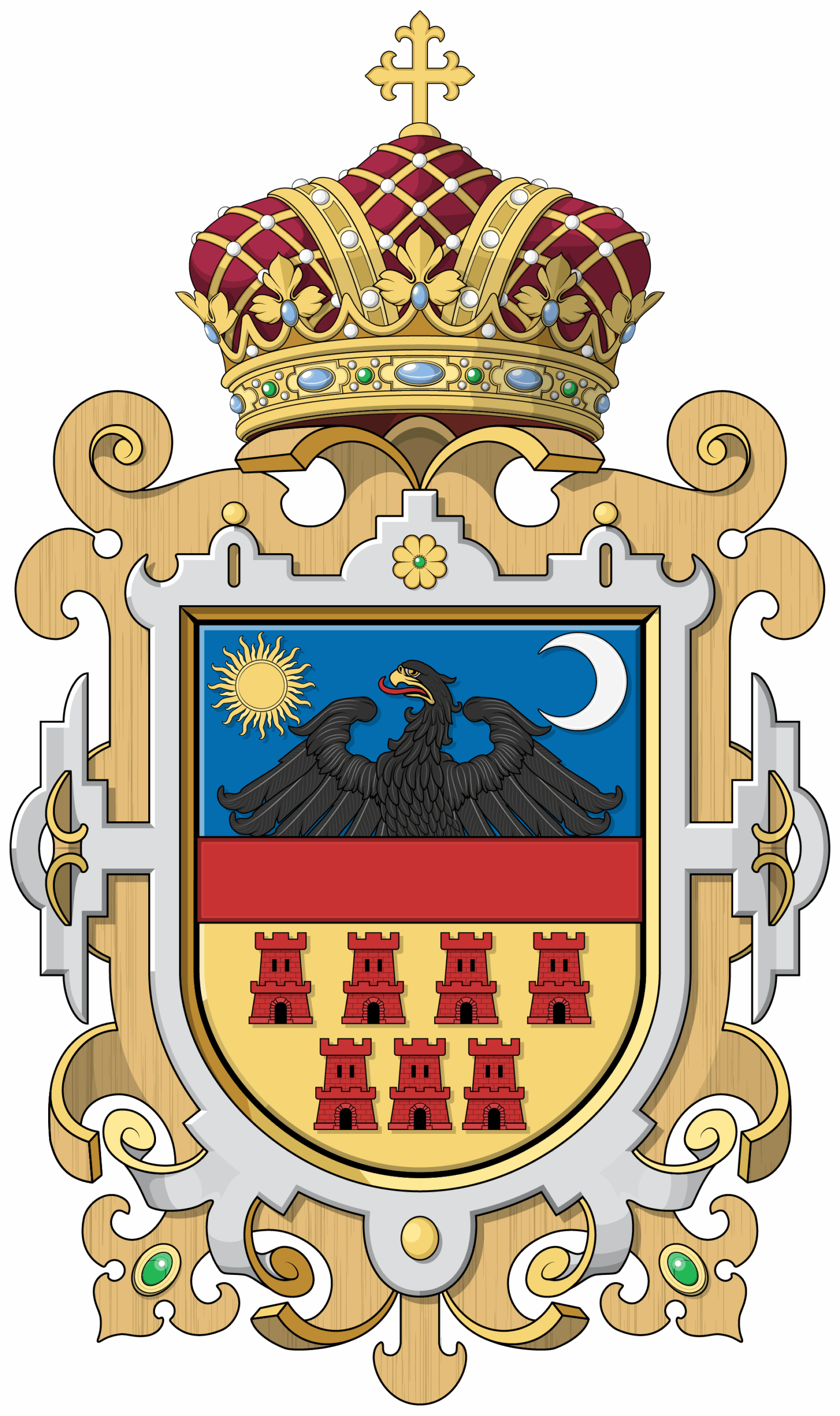
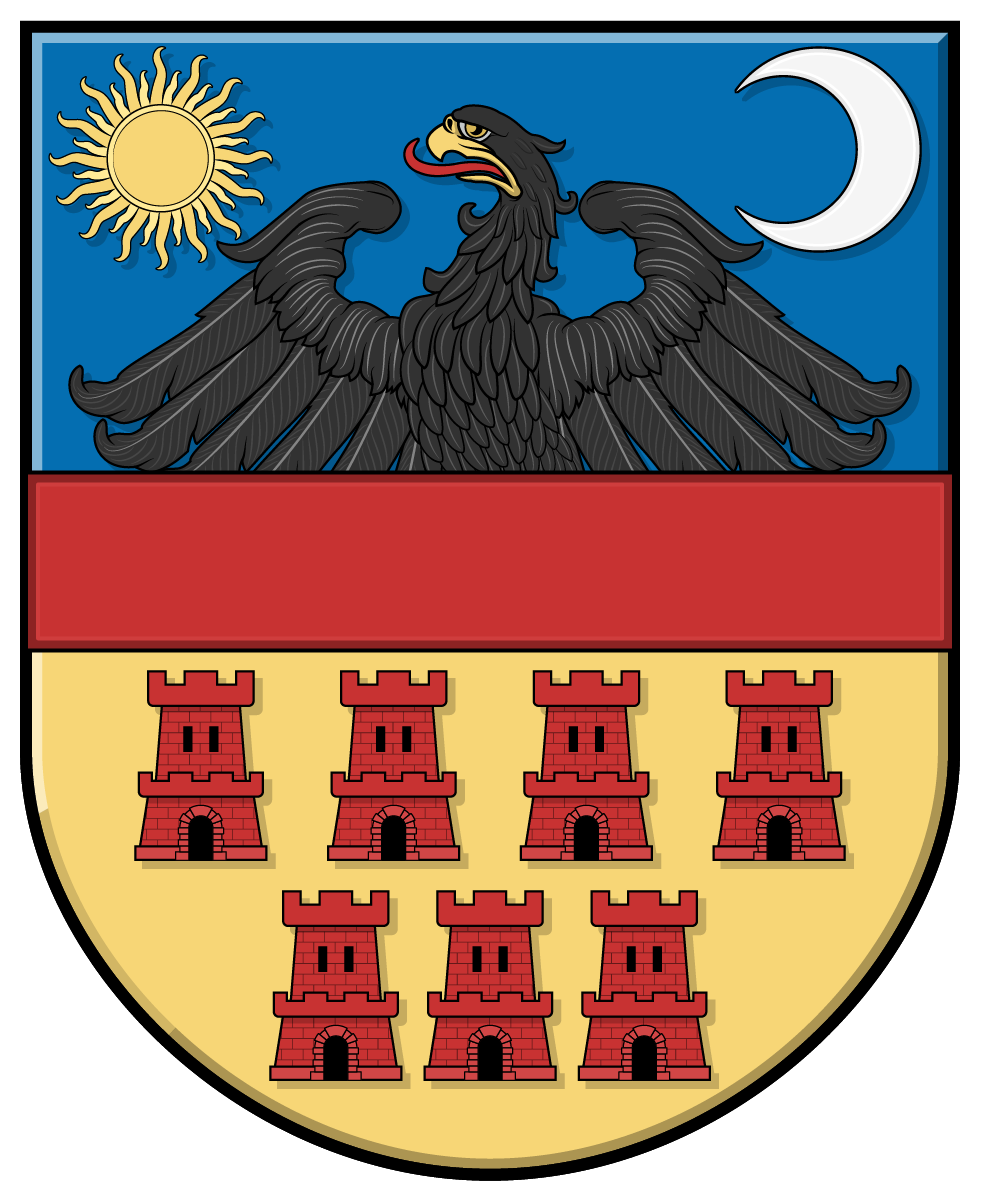
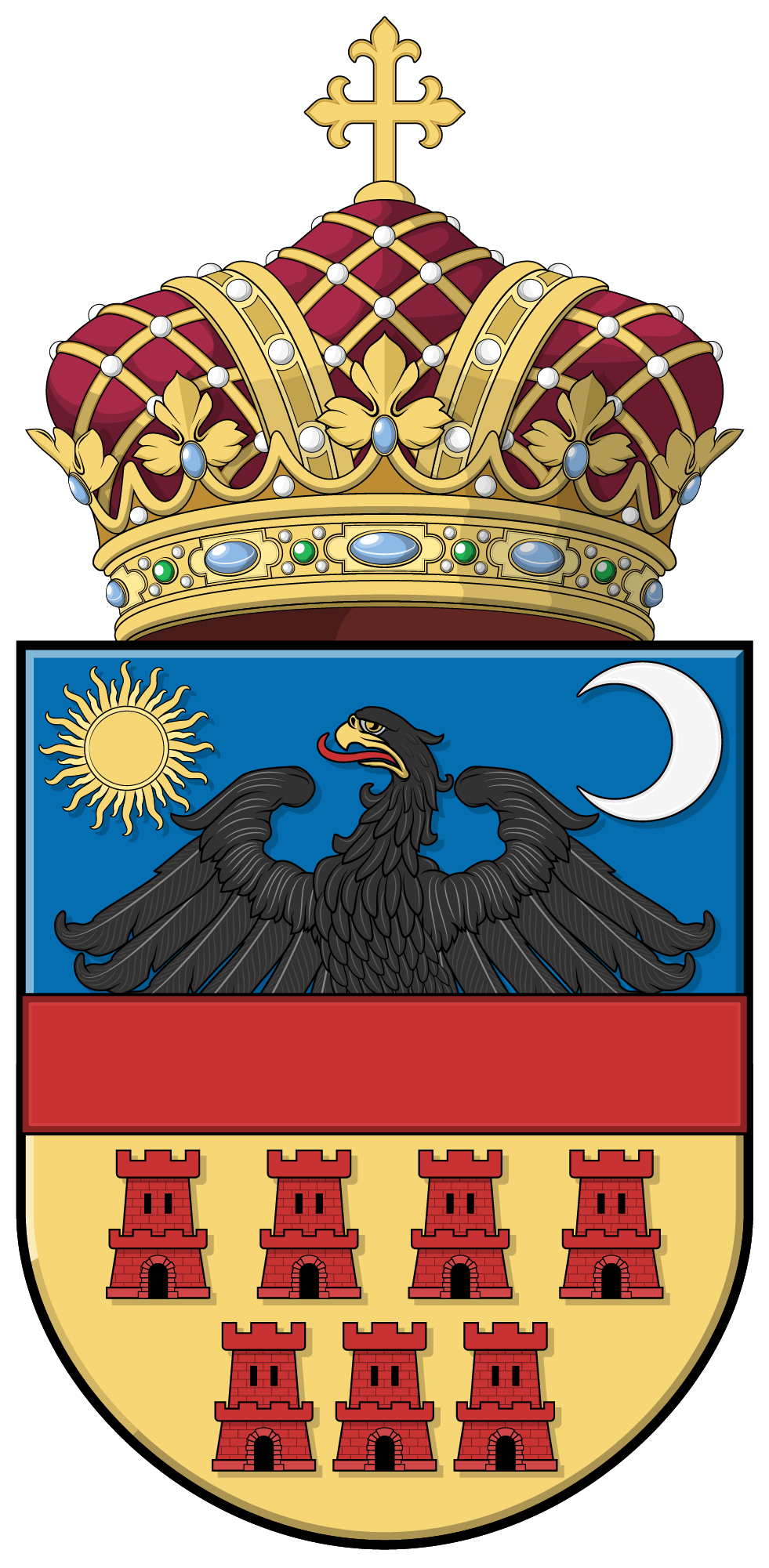
In the historical coat of arms of Transylvania, the shield is divided into two parts by a red horizontal band (fess). In the upper blue field there is a black falcon (turul) cut at the waist, armed in gold and with a red tongue, accompanied on the dexter side by a golden sun (today usually depicted simply as a sun without a human face) and on the sinister side by a silver waning moon. In the lower gold field, seven red bastions with black gates and two windows each are arranged in two rows (4 above, 3 below).
The Origin of the Coat of Arms of Transylvania
The red band dividing the shield first appears on a thaler issued by Prince Michael I Apafi in 1666; it had not occurred in earlier representations.
Officially, the coat of arms was granted by Empress Maria Theresa in 1765, when Transylvania was elevated to the rank of a Grand Principality. In the Maria Theresa coat of arms of 1765, the shield is surmounted by a princely crown and flanked by allegorical female figures: Justice on the right and Abundance and Reward on the left. After Transylvania was united with the Kingdom of Hungary in 1848, these elements fell out of use.
At the Diet held in Szászsebes (Mühlbach) in 1659, where decisions were made regarding the symbols of the estates, it was decreed that the Székelys should be represented by the sun and the moon, with the moon depicted in a waxing phase. Furthermore, the counties of Transylvania were to be symbolized by a rising eagle, while the Saxon estate nation was represented by the seven bastions, according to the resolution of the assembly.
According to the generally accepted interpretation, the coat of arms combines the symbols of the three privileged nations of Transylvania: the Hungarians, the Székelys, and the Saxons. It most likely took its definitive form during the reign of Prince Sigismund Báthory, around 1590. The Hungarian nation is represented by the black turul bird, the Székelys by the sun and the moon, and the Saxon seats (Kőhalom, Medgyes, Nagysink, Sebes, Szeben, Szászváros, and Szerdahely) by the seven red bastions.
During the period of Transylvania’s independent statehood, these heraldic elements were often combined with the personal family coats of arms of the reigning princes. For a long time, the placement of the elements within the shield was not fixed and varied from one depiction to another.
Coat of arms of Transylvania in other coats of arms
The coat of arms can be found incorporated into the Hungarian middle coat of arms (after 1867), and it also appears in the present-day coat of arms of Romania.
Original image source: Hugo Gerhard Ströhl – Wappen der Österreichisch-Ungarischen Monarchie, from the artist’s Heraldischer Atlas, 1899
Text source: Wikipedia
The visual content of this website may be freely used under the terms of the Creative Commons 4.0 license, provided that the source is clearly indicated and the attribution includes a full, clickable link to https://cimerek.hu or to the exact web address of the specific content.