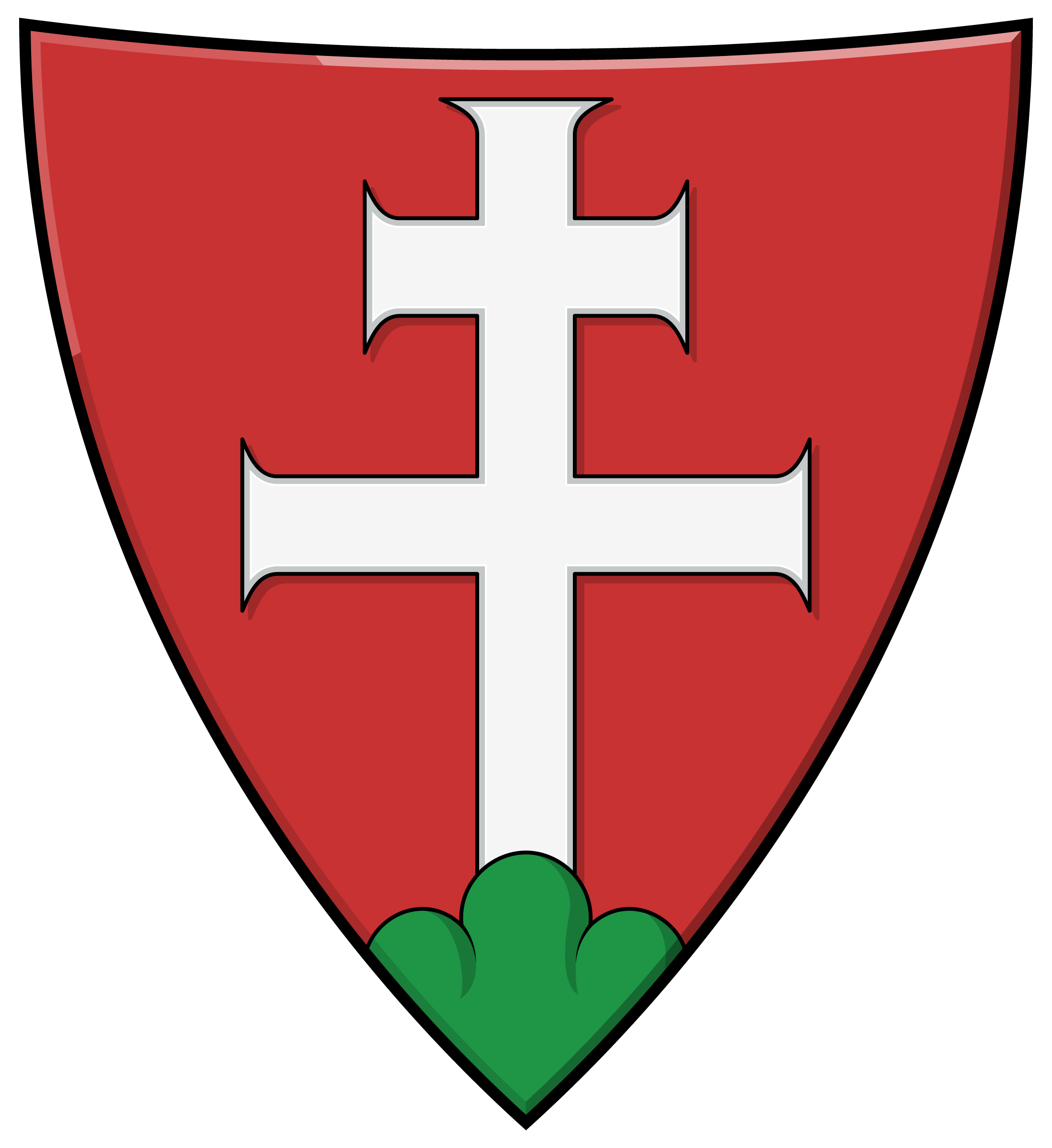
Coat of arms of King Ladislaus IV of Hungary
Name:
Epithet:
Country:
Title:
Dynasty:
Reign:
Ladislaus IV
Ladislaus IV, also known as Ladislaus the Cuman (1262 – 10 July 1290), was one of the most controversial figures of the medieval Kingdom of Hungary. He was the son of King Stephen V and Elizabeth the Cuman, and ascended the throne in 1272 during his childhood, following his father’s sudden death. Barely ten years old at the time, the young ruler inherited a kingdom facing severe internal difficulties. As a member of the Árpád dynasty, he possessed a legitimate claim to the throne, yet his Cuman maternal lineage profoundly influenced his entire reign.
Redrawing of the coat of arms based on his seal
The Child King and Feudal Conflicts
At the time of his accession, the governance of the kingdom fell into the hands of the leading magnates. The Csák, Kőszegi, Gutkeled, and other powerful baronial families competed for dominance, while royal authority steadily weakened. This period marked the beginning of feudal anarchy, during which magnates sought independent rule over their own territories. The young king’s position remained uncertain, and the effective control of the realm was exercised by rival baronial leagues.
In 1277, the Assembly of Rákos proved to be a turning point, as the young monarch was declared of age. From that moment on, he could assume direct control of the kingdom and attempted to consolidate the fragmented state. Although he initially managed to assert his authority, the influence of the baronial factions continued to divide the country.
Alliance and the Battle of Marchfeld
One of Ladislaus IV’s most significant foreign policy decisions was his alliance with Rudolf of Habsburg. At the Battle of Marchfeld in 1278, Hungarian and Cuman troops played a decisive role in the defeat of King Ottokar II of Bohemia. This victory strengthened the king’s international prestige and brought a brief period of stability to the kingdom. The campaign demonstrated that the young Árpád ruler was capable of achieving notable military success.
Cuman Heritage and Conflicts with the Church
His maternal Cuman heritage left a lasting mark on Ladislaus’s reign. He frequently relied on the Cumans, whose support he needed against the baronial leagues. However, the Cumans often preserved their traditional customs, which the Christian Church condemned. This led to continuous conflict with papal authority. The papal legate, Philip, Bishop of Fermo, excommunicated the king on several occasions and placed him under significant political pressure.
In 1282, the Battle of Lake Hód brought a decisive confrontation: the Cumans rebelled but were defeated by the royal army. Although the uprising was crushed, distrust from the Church and the nobility continued to grow.
The Second Mongol Invasion
The Mongol incursion of 1285 dealt a severe blow to the kingdom. During the Second Mongol Invasion, the population suffered heavy losses, and some contemporaries even accused the king of having invited the foreign attackers himself. Although this claim remains historically disputed, public trust was shaken. The events further weakened royal authority and contributed to renewed internal chaos.
Tragic End
The reign of Ladislaus IV did not last long. On 10 July 1290, he was murdered by his own Cuman soldiers in the region of the Körös rivers. He was only twenty-eight years old at the time of his death. The assassination shocked the kingdom and marked the end of an era: the power of the Árpád dynasty began to decline, as only Andrew III remained to represent the dynasty after Ladislaus.
The Legacy of Ladislaus IV
Historiography has long judged Ladislaus IV in contradictory terms. Some regard him as a weak ruler who became a pawn of the magnates, while others argue that he attempted to preserve royal authority under extremely difficult circumstances. His Cuman heritage often placed him in opposition to the Hungarian nobility and the Church, yet in foreign policy he proved himself a capable military leader. His short life and tragic death have ensured that his figure remains one of the most debated in medieval Hungarian history.
Original image source: Internet
Text source: ChatGPT
The visual content of this website may be freely used under the terms of the Creative Commons 4.0 license, provided that the source is clearly indicated and the attribution includes a full, clickable link to https://cimerek.hu or to the exact web address of the specific content.