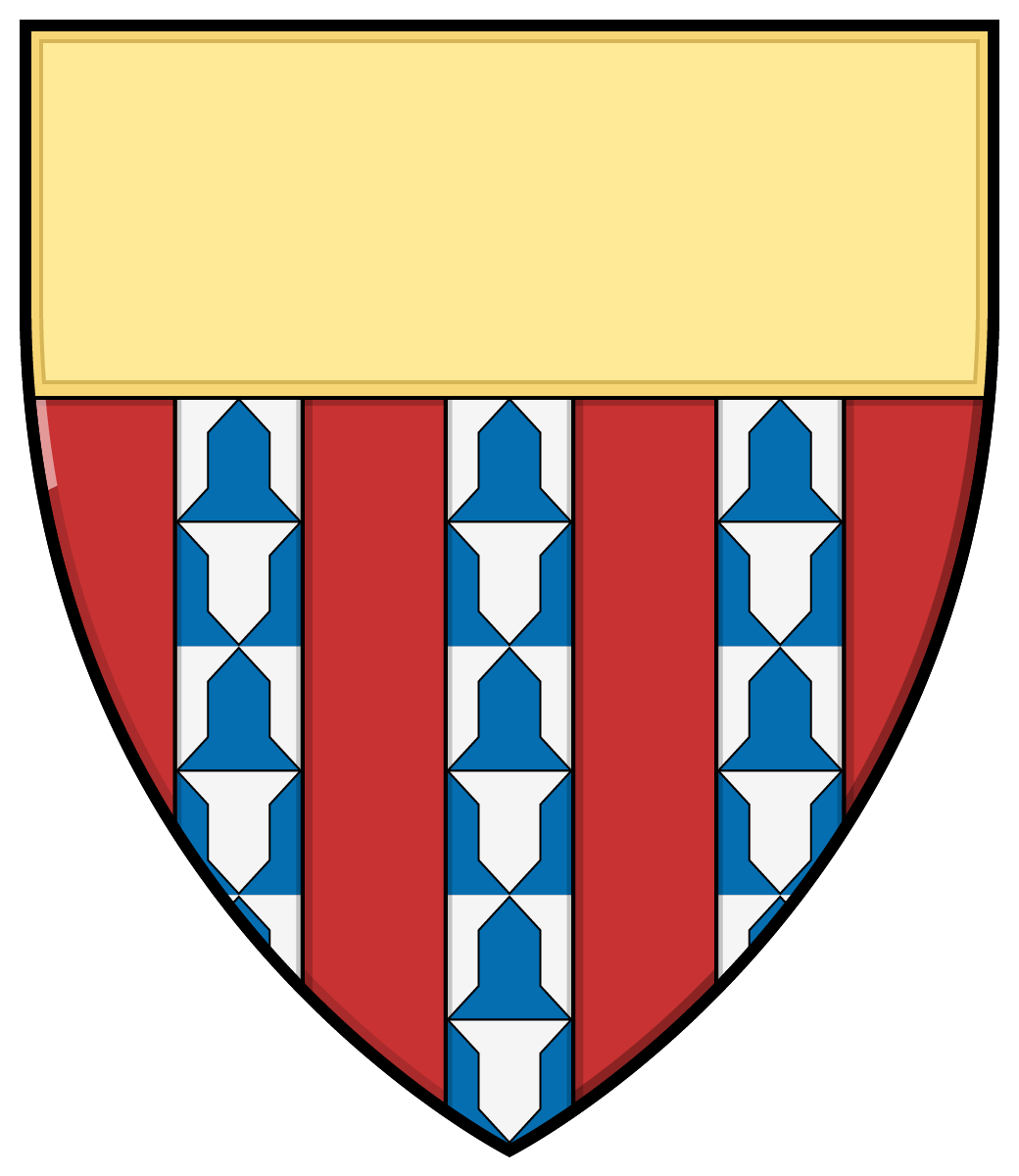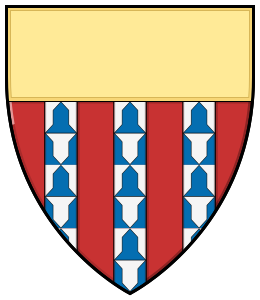
Coat of Arms of Anna of Châtillon (also known as Anna of Antioch)
Name:
Epithet:
Country:
Title:
Dynasty:
Reign:
The Origins of Queen Agnes of Antioch and Her Marriage to Béla III
Originally named Agnes (Agnès de Châtillon, Antioch, 1153 – Székesfehérvár, 1184) was a Princess of Antioch, the first wife of King Béla III, and Queen Consort of Hungary from 1172 until 1184. She was the daughter of Raynald of Châtillon, Prince of Antioch (a prominent figure of the Crusades), and Constance, Princess of Antioch.
Prince Béla, who was living in Constantinople and being raised as the heir presumptive to the imperial throne, was given the hand of Princess Agnes by Byzantine Emperor Manuel I Komnenos in 1169. This marriage alliance was arranged after the Emperor celebrated the birth of his own son, which subsequently dissolved Béla’s status as heir to the Byzantine throne and his engagement to the Emperor’s daughter. Upon ascending the Hungarian throne in 1172, the highly capable King Béla III found a worthy and influential spouse in Agnes—who adopted the name Anna in Hungary—as attested by surviving historical sources.
The coat of arms of the Châtillon family features a distinct heraldic design: gules (red), three pales vair (squirrel fur pattern), under a chief or (gold).
Historical Impact and the Royal Tomb in Székesfehérvár
Queen Anna played a pivotal role in the cultural and political life of the Hungarian royal court. Through her Western European (French/Crusader) lineage and Byzantine upbringing, she facilitated the integration of French cultural influences, supported the establishment of the Cistercian monastic order in Hungary, and strengthened the international diplomatic ties of the Kingdom of Hungary.
She remains one of the few Hungarian queens from the Árpád dynasty whose mortal remains have been positively identified. Following her death in 1184, she was interred in the Basilica of the Assumption of the Blessed Virgin Mary in Székesfehérvár. Her tomb, alongside that of her husband, King Béla III, was discovered intact in December 1848 during excavations among the ruins of the ruined basilica. This represents the only Hungarian royal couple whose burial site survived the devastation of the Ottoman occupation undisturbed. Their remains are currently preserved in the Matthias Church (Church of the Assumption of the Buda Castle) in Budapest.
The Children of King Béla III and Anna of Châtillon
Seven children were born from their marriage. Among them, two became Kings of Hungary, while their daughters married into major European ruling houses, securing the dynastic influence of the House of Árpád:
Emery (Imre, 1174–1204): King of Hungary between 1196 and 1204.
Margaret (Margit, 1175–1223): Wife of Byzantine Emperor Isaac II Angelos (known as Empress Maria in Byzantium).
Andrew (Andrew II / II. András, 1176–1235): King of Hungary between 1205 and 1235, issuer of the Golden Bull of 1222.
Solomon (Salamon): Died young.
Unnamed daughter: Likely died in infancy.
Stephen (István): Died young.
Constance (Konstancia, 1181–1240): Wife of King Ottokar I of Bohemia.
Source of the original image: Internet
Source of the text: Wikipedia
The visual content of this website may be freely used under the terms of the Creative Commons 4.0 license, provided that the source is clearly indicated and the attribution includes a full, clickable link to https://cimerek.hu or to the exact web address of the specific content.