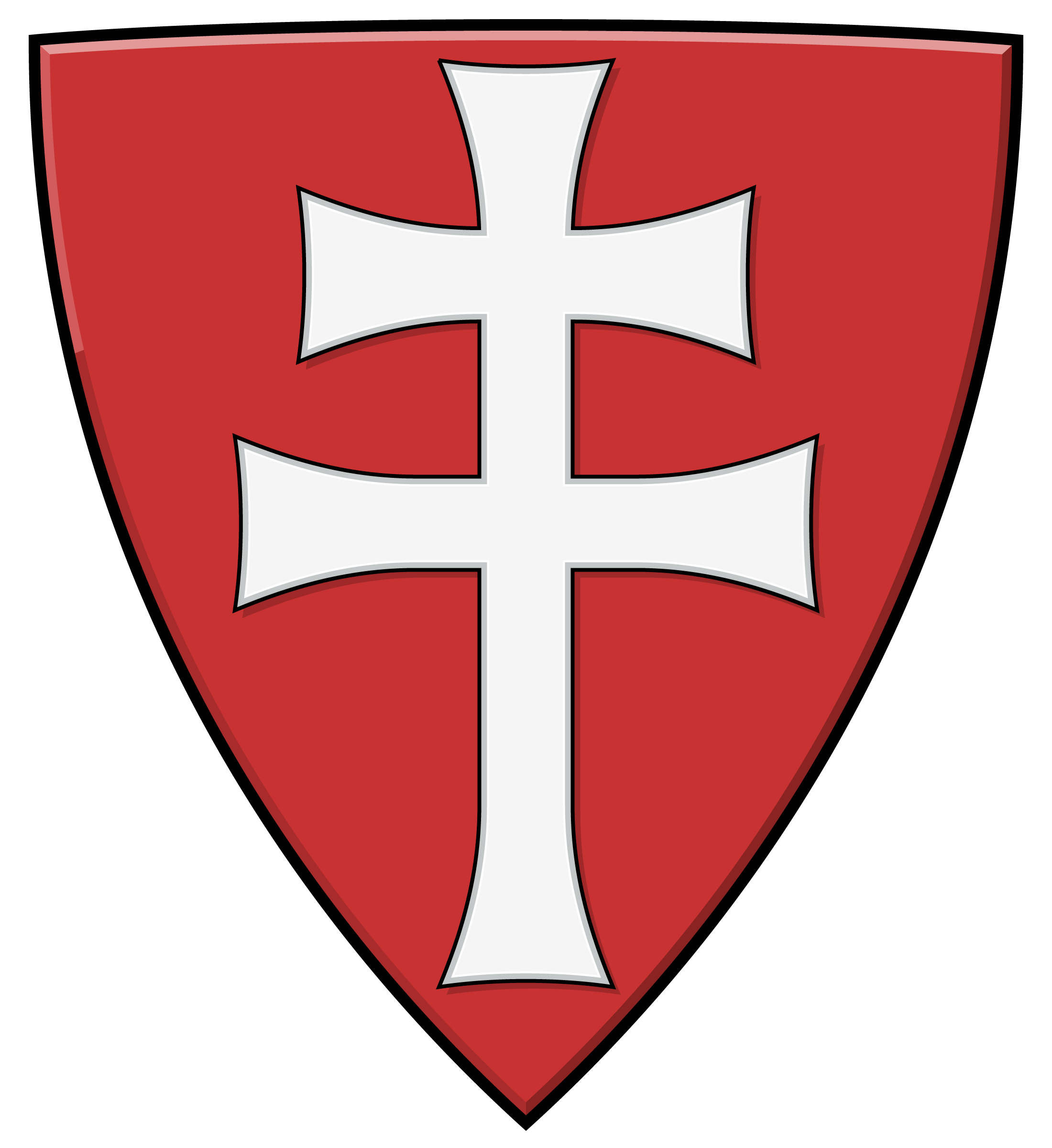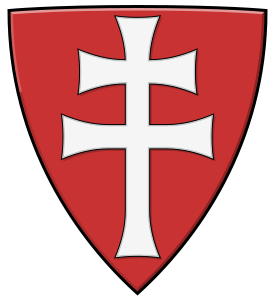
Coat of arms of King Béla III of Hungary
Name:
Epithet:
Country:
Title:
Dynasty:
Reign:
Béla III – the “Knight King”
(around 1148 – 23 April 1196) was one of the most significant rulers of the Árpád dynasty, King of Hungary from 1172 to 1196. As a young man he was brought up in Byzantium, where he was even considered as a possible heir to the imperial throne. After returning to Hungary, he ascended the throne following the death of his brother, Stephen III.
His wife was Anna of Châtillon, and his sons were King Emeric (Imre I) and King Andrew II of Hungary.
During his reign, Hungary was strengthened both politically and economically. Béla established the Royal Chancellery, which laid the foundations of regular written administration. In his time the Funeral Sermon and Prayer (Halotti beszéd és könyörgés)—the oldest surviving Hungarian-language text—was produced, and Anonymus, the author of the Gesta Hungarorum, was also active.
In foreign policy he successfully expanded Hungarian influence: he reconquered Croatia and Dalmatia, and gained control over Bosnia, Syrmia, and temporarily also Galicia (Halych). He maintained close relations with the papacy and the Western Christian kingdoms. By supporting the Cistercian Order, he introduced cultural influences from France into Hungary, strengthening the country’s integration into Europe.
During the reign of Béla III, Hungary became one of the strongest kingdoms in Central Europe. Before his death he was preparing for a crusade, but he died in 1196. He was buried in Székesfehérvár; his tomb was rediscovered during 19th-century archaeological excavations and remains an important source for research on the Árpád dynasty.
The coat of arms
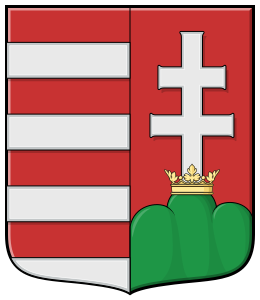
The coat of arms was redrawn on the basis of Béla III’s seal. The double cross, which appears for the first time on his seal around 1190, is most likely of Byzantine origin (Béla was raised at the imperial court as the prospective heir to the Byzantine throne). In later versions, the triple hill appears beneath it, and later a crown, from which the double cross rises.
The significance of Béla III
He was one of the most outstanding kings of medieval Hungary. Under his rule, the Kingdom of Hungary gained political stability, economic prosperity, and international prestige, providing a strong foundation for the later successes of the Árpád dynasty.
He was buried in Székesfehérvár, and his grave and remains were excavated in 1848, making them especially important for archaeogenetic research on the Árpád dynasty.
Source of the original image: Internet
Text source: ChatGPT
The visual content of this website may be freely used under the terms of the Creative Commons 4.0 license, provided that the source is clearly indicated and the attribution includes a full, clickable link to https://cimerek.hu or to the exact web address of the specific content.