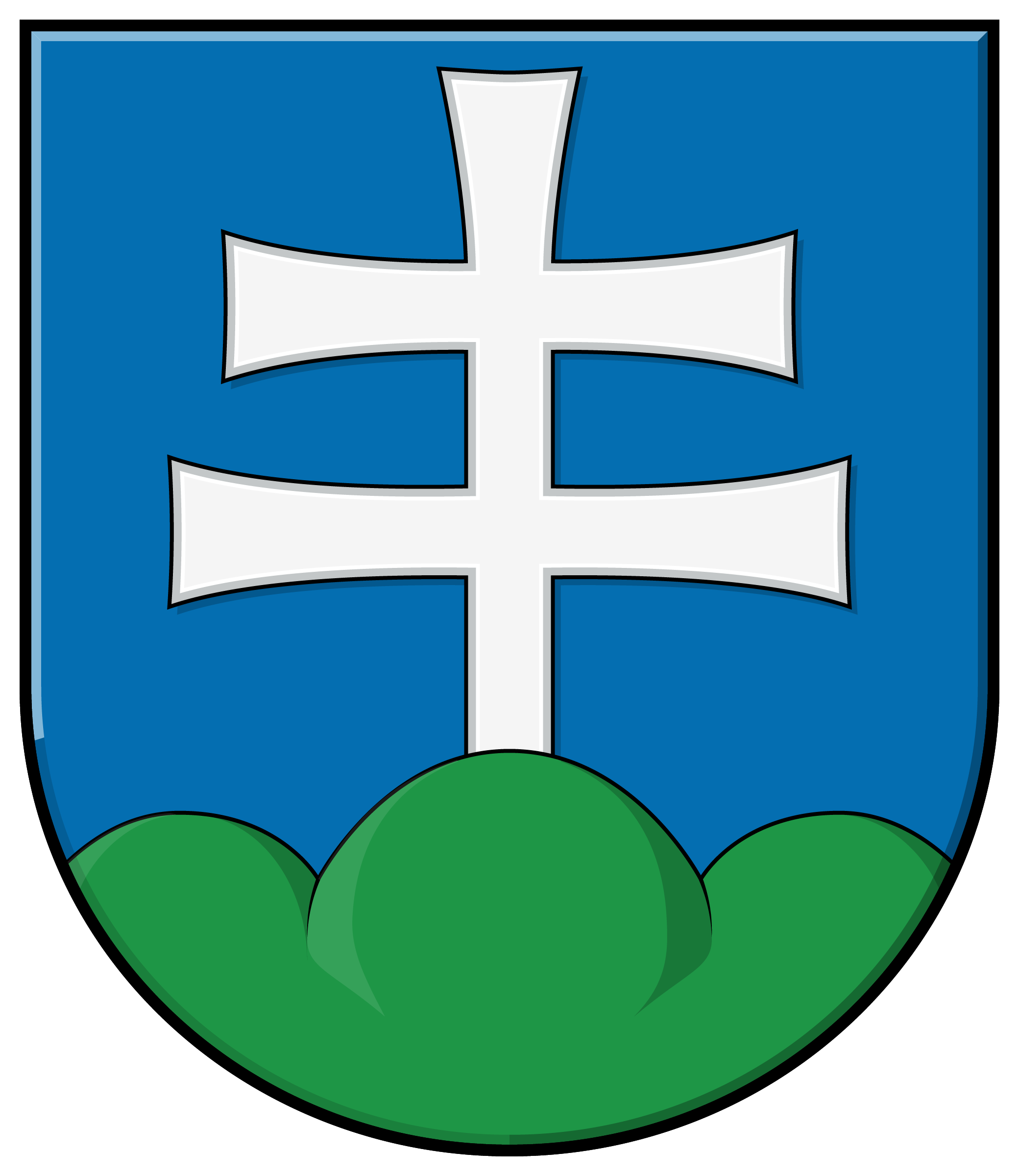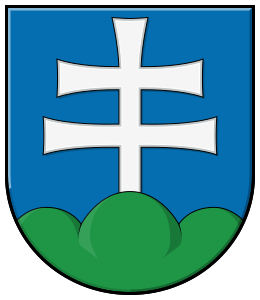
Coat of arms of Spiš Pledge (starostwo spiskie)
Location:
Type:
Grantor:
Year:
Status:
The Spiš Pledge
(Polish: starostwo spiskie) was one of the most remarkable diplomatic and legal arrangements in the history of Hungary and Poland. Under this agreement, a part of the Spiš (Szepes) region – including 16 towns and several castle estates – came under Polish administration between 1412 and 1772, while formally remaining part of the Kingdom of Hungary.
Origins of the Spiš Pledge
The pledge was established in 1412, when King Sigismund of Luxembourg of Hungary, facing financial difficulties, took out a loan from King Władysław II Jagiełło of Poland. In exchange for 37,000 Prague groschen – intended to finance his campaign against Venice – Sigismund pledged part of the Spiš region as collateral.
The pledged territories included:
16 towns (such as Poprad, Levoča, and Spišské Podhradie),
as well as the castles and estates of Lubowla, Podolin, and Gnézda.
This arrangement did not constitute a permanent territorial transfer but rather a form of security, which nevertheless remained in place for several centuries.
Legal Status and Administration
The uniqueness of the Spiš Pledge lies in its dual legal status:
legally, the territory remained part of the Kingdom of Hungary,
administratively and economically, it was governed by Poland.
The towns paid their taxes to the Polish crown, and authority over them was exercised by the starosta (Spiš captain)appointed by the Polish king.
The administrative center of the Polish authority was the castle of Lubowla (today Ľubovniansky hrad), which served as the political and military hub of the region.
The Role of the Starostas
The pledged territory was governed by starostas, several of whom were notable historical figures:
the first captain was the legendary Polish knight Zawisza Czarny,
later, the office was held for an extended period by the influential Lubomirski family.
The starostas exercised administrative, judicial, and military authority within the pledged lands.
Duration and End of the Pledge
Although the Kingdom of Hungary made several attempts to redeem the pledged territories, these efforts were unsuccessful. As a result, the pledge endured for more than three and a half centuries.
It finally came to an end in 1772, during the First Partition of Poland, when the Habsburg Monarchy occupied and reintegrated the territory into Hungary.
Present-Day Situation
Today, the historical territory of the Spiš Pledge is divided between modern states:
the majority lies in Slovakia,
while a smaller northern area, known as “Polish Spiš,” belongs to Poland.
The Coat of Arms of Spiš during Polish Administration
During the period of the pledge, the heraldic symbols of the region also developed in a distinctive way, reflecting its dual political affiliation.
The Double Cross Motif
In the 16th century, Erazm Kamień, in his work Liber insigniorum (1575), attributes a coat of arms to Spiš featuring:
a silver double cross standing on a green hill,
set within a blue field.
This motif clearly derives from the coat of arms of the Kingdom of Hungary and symbolized the historical affiliation of the region. It is often interpreted as representing:
the towns of Spiš,
and the associated territories, including the Lubowla district.
Alternative Heraldic Tradition
Later sources describe a different coat of arms:
three rocky hills in a silver field,
with rivers flowing from their base,
and a sun and crescent moon above them.
According to tradition, this coat of arms was granted by Maria Theresa in 1774, although the historical authenticity of this attribution is not always fully confirmed.
Seals and Heraldic Usage
The seals used in the pledged territory reflect its political circumstances:
until 1772, the towns often used seals featuring the Polish eagle,
in the 18th century, areas such as Lubowla and Podoliniec used seals depicting Saint Michael the Archangelslaying a dragon,
the starostas maintained their own personal heraldic seals.
Az eredeti kép forrása: Nemzetijelkepek.hu
Szöveg forrása: ChatGPT


The visual content of this website may be freely used under the terms of the Creative Commons 4.0 license, provided that the source is clearly indicated and the attribution includes a full, clickable link to https://cimerek.hu or to the exact web address of the specific content.