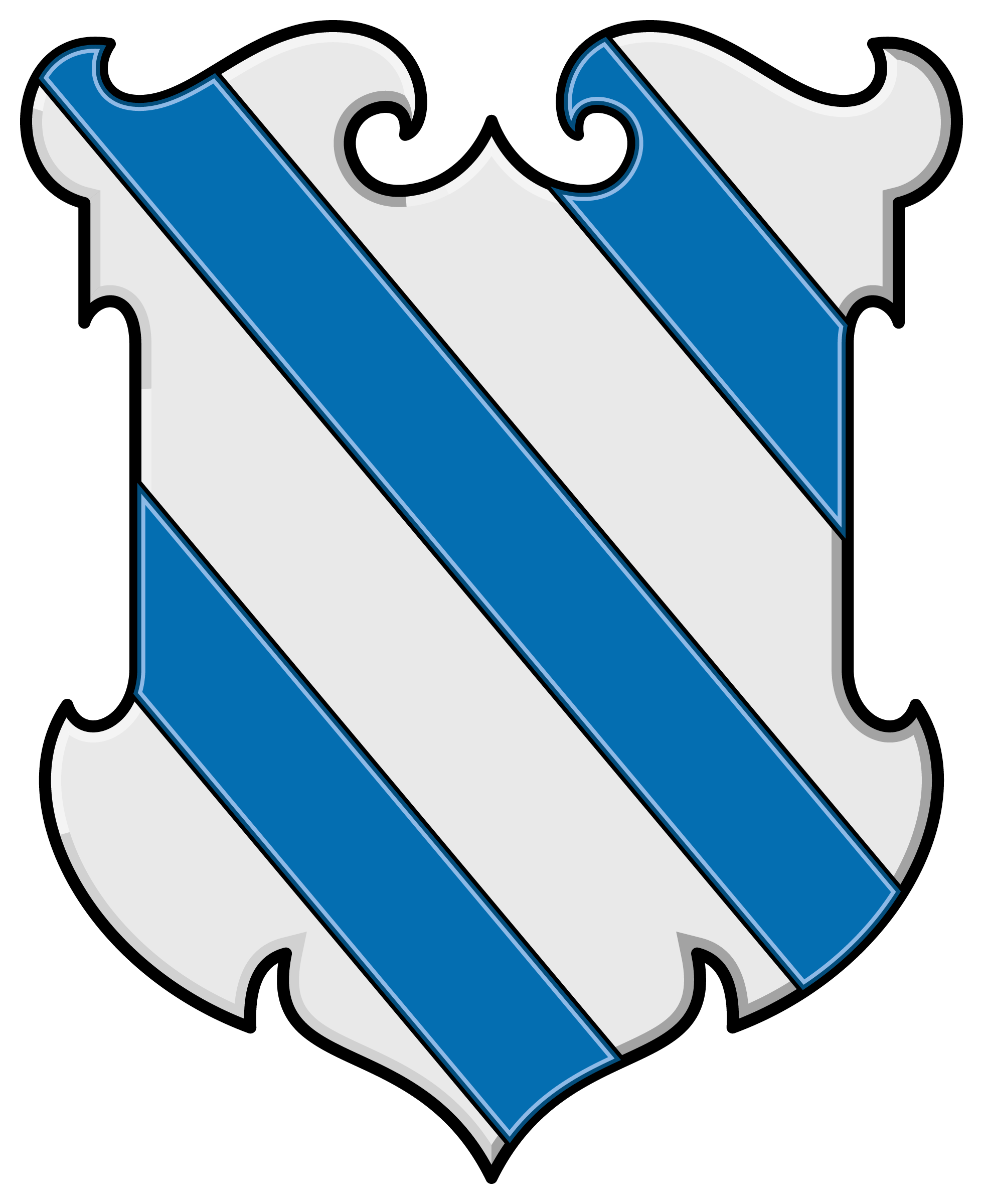
Coat of arms of Ragusa
Lokáció:
Típus:
Jogállás:
Made by:
Ragusa
Ragusa (Croatian: Dubrovnik) was a historic maritime city-state on the Adriatic coast in present-day Croatia. During the Middle Ages and the Early Modern period it existed as the Republic of Ragusa (Latin: Respublica Ragusina), becoming one of the most important commercial and naval centers of the Mediterranean.
Origins
The settlement was founded in the 7th century when inhabitants of the nearby Roman town of Epidaurum fled Avar and Slavic attacks and established a new town on a rocky island near the coast. The early settlement was known as Laus or Lausa, from which the later name Ragusa developed.
Medieval development
In its early history the city was under the authority of the Byzantine Empire. From the 13th century it came increasingly under the influence of the Republic of Venice.
After the Treaty of Zadar, Ragusa recognized the suzerainty of the Kingdom of Hungary while retaining broad autonomy and maintaining its republican political institutions.
Government and society
The state operated as an aristocratic republic. Political power was exercised by several councils, including the Great Council, the Senate, and the Minor Council. The head of state was the rector, who was elected for a very short term and held mostly ceremonial authority.
Golden age of Ragusa
Ragusa reached the height of its prosperity in the 15th and 16th centuries. Its merchants and ships traded across the Mediterranean, and the city served as an important intermediary between the Balkan regions, the Ottoman Empire, and Western Europe. Maritime trade, shipbuilding, and the salt trade formed the basis of its economy.
Decline and fall
In 1667 a devastating earthquake destroyed much of the city and significantly weakened the republic. Although Ragusa survived as an independent state for more than a century afterward, its influence gradually declined.
The Republic of Ragusa finally ceased to exist in 1808, when French forces abolished its independence during the Napoleonic Wars.
Historical significance
For centuries Ragusa maintained close diplomatic and commercial relations with the Kingdom of Hungary, recognizing the Hungarian kings as its overlords while preserving its political and economic autonomy. The city became known for its skilled diplomacy, maritime trade, and cultural development.
Original image source: Österreichisch-Ungarische Wappenrolle – Hugo Gerard Ströhl (1890, Wien: Schroll)
Source: ChatGPT
The visual content of this website may be freely used under the terms of the Creative Commons 4.0 license, provided that the source is clearly indicated and the attribution includes a full, clickable link to https://cimerek.hu or to the exact web address of the specific content.