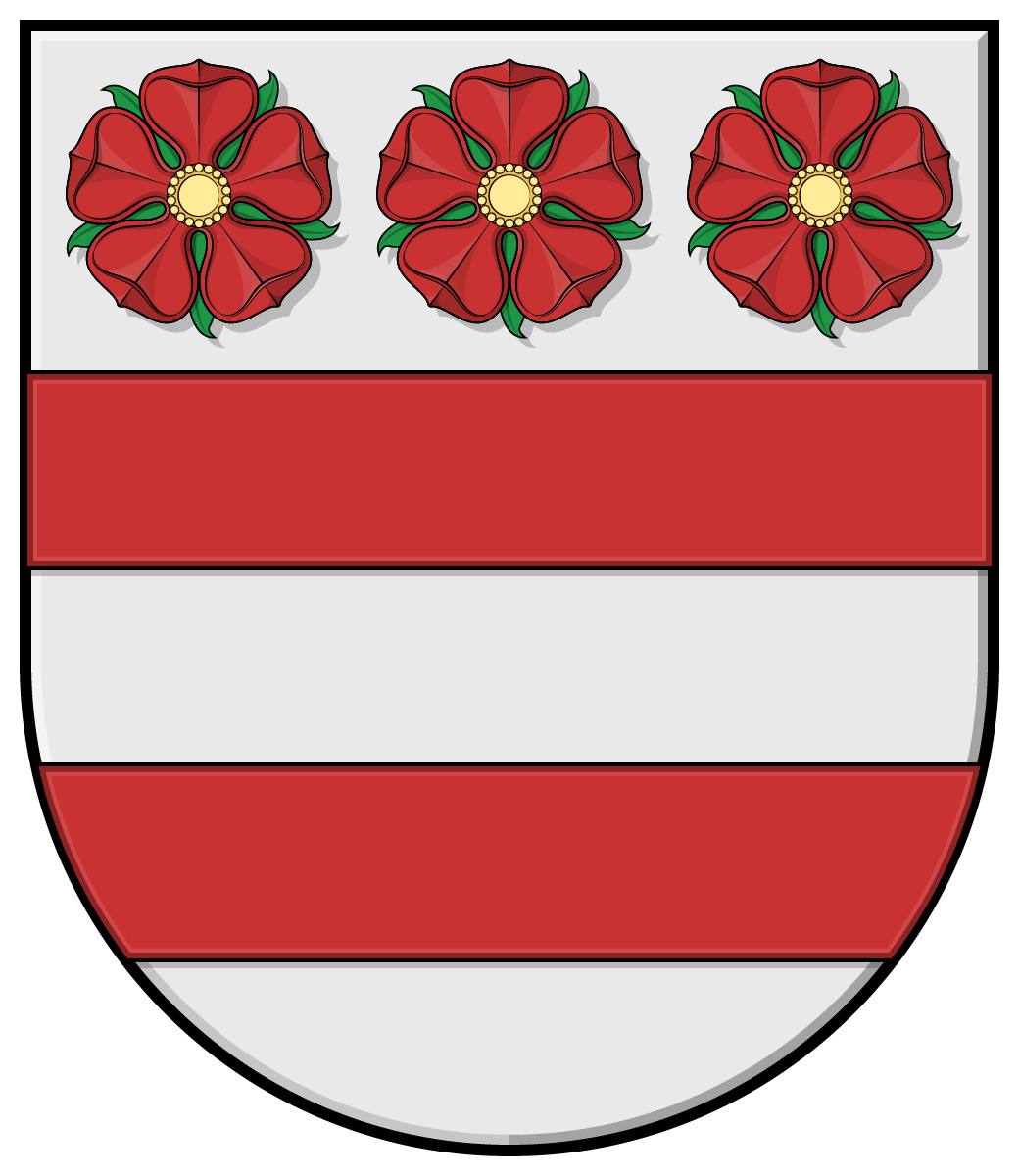
Coat of arms of Prešov
Location:
Type:
Status:
Grantor:
Year:
Prešov (Hungarian: Eperjes; German: Eperies or Preschau; Latin: Fragopolis or Eperiessinum) is a city in eastern Slovakia and the country’s third most populous city. It is the administrative seat of the Prešov Region—the most populous and second-largest region of Slovakia—as well as of the Prešov District. The city also includes the districts of Nižná Šebastová (Alsósebes), Solivar (Sóbánya), Šalgovík (Sebessalgó), Cemjata (Savanyúvíz), and Šarišské Lúky (Tótsóvár).
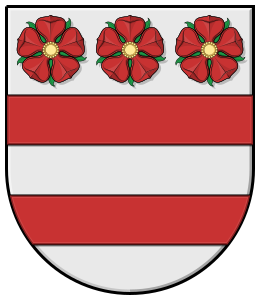
The current coat of arms of Prešov is identical to its first armorial charter, which was granted by King Ladislaus V of Hungary in 1453.
Location
Prešov lies approximately 33 km north of Košice, in the northern part of the Košice Basin, on the banks of the Torysa River. The river flows through a narrow valley between the Dúbrava (Szepestölgyes) and Bikoš hills as it leaves the Upper Torysa Valley (Šarišské podolie).
The lowest point of the city lies in the river’s floodplain at 229 m above sea level, while the highest point is Malkovská hôrka, part of the Šariš Highlands (Šarišská vrchovina), at 480 m. The city center, including the Co-Cathedral of St. Nicholas, is situated at an elevation of 255 m.
The city’s territory is rich in mineral springs. Notable springs are located in the southwestern part of the area—Borkut, Popík, and Malý Borkut—which yield lightly mineralized calcium–magnesium waters with a discharge of approximately 1 liter per second. In the area of Cemjata, the Kvašná voda spring produces carbonated calcium–magnesium water with a flow rate of 9 l/s. In Išľa (part of Nižná Šebastová) and Solivar, sodium chloride–rich waters emerge; the springs at Išľa were formerly used for balneological purposes.
The average annual temperature is 8.6 °C. July is the warmest month with an average temperature of 19.5 °C, while January is the coldest, averaging –3.5 °C. Average annual cloud cover is 65%, highest in December and lowest in September. The average annual number of sunshine hours is 1,956, peaking in July (268 hours) and reaching its minimum in December (43 hours). Average annual precipitation is 631 mm, with the highest rainfall occurring in summer (July–August) and the lowest in February–March. The number of snowy days ranges from 30 to 42 per year.
Origin of the Name
The name of the city derives from the Hungarian word eper (“strawberry”), referring to a place where wild strawberries were abundant.
History of Prešov
Archaeological finds in the surrounding area date back to the Middle Paleolithic period (c. 80,000–40,000 BC) and to the Hallstatt culture.
The Middle Ages
A Slavic settlement already existed at the site in the 8th century.
According to legend, present-day Prešov was founded in 1132 by King Béla II (“the Blind”), who named it after the strawberries characteristic of the area. The city’s coat of arms depicts three red roses in a silver field in the upper part, with two red and two silver horizontal stripes below. The city flag likewise alternates two red and two silver stripes.
During the reign of King Géza II, Flemish settlers arrived in the city. The first written mention of Prešov dates from 1233, followed by another reference in 1247, both under the name Epuryes. The 13th century—particularly the period following the Mongol invasion of 1241—saw significant German settlement, primarily in the Spiš region but also in Prešov. The city’s importance stemmed from its position at the crossroads of major trade routes connecting Abaúj, Spiš, Poland, and Galicia. German settlement accelerated urban development. In 1288, the Carmelites founded a monastery here, and in 1299, under King Andrew III, Prešov received town privileges.
The 14th and 15th centuries marked a period of economic prosperity. Numerous guilds were established (including furriers, blacksmiths, tailors, and shoemakers), and approximately 2,000 inhabitants were engaged in crafts. In 1312, King Charles I (Charles Robert) had the town fortified with walls, and in 1324 granted it judicial autonomy. In 1347, the town received customs exemptions, and in 1474 it was granted the rights of the city of Buda. Its autonomy is reflected in its status as one of the tárnoki (treasury) towns.
In 1395, a Hungarian army led by Chancellor János Kanizsai and Palatine Leusták Ilsvai halted the forces of King Władysław II of Poland near the city. In 1435, Prešov was exempted from paying the crown’s weekly market toll. In 1441, the prosperous town was devastated by Polish troops. In 1455, King Ladislaus V granted the city its first coat of arms and the right to hold national fairs. In 1514, King Vladislaus II elevated Prešov to the status of a free royal city. The city’s prosperity was reflected in its appearance, with elegant burgher houses constructed throughout the 15th century.
Prešov in the Early Modern Period
In the 16th century, Prešov experienced a golden age and became one of the centers of the Reformation. In 1531, the city school was transformed into a Lutheran institution. In the early 17th century, the city was ravaged by the troops of Basta and Belgioioso. By 1656, a printing house was operating in the city, and in 1667 the Evangelical College was founded. In 1672, the forces of Imre Thököly besieged the city, followed a year later by the mercenaries of Count Wolkra. In 1673, Emperor Leopold I deprived Prešov of its municipal rights and ordered the demolition of its walls, effectively ending its autonomy.
In 1683, the city repelled a Polish attack. On 17 September 1684, General Schulz defeated the Kuruc camp near the city and, after a seven-week siege, occupied Prešov—breaking the terms of capitulation. In 1687, General Antonio Caraffa carried out brutal reprisals: more than 300 people were tortured, and 24 wealthy burghers were publicly executed in order to confiscate their property. In 1696, a devastating fire struck the city.
In 1701, Francis II Rákóczi was briefly held in Prešov after being captured by Imperial General Solari at Sáros Castle. In 1704, the Kuruc forces captured the city after a 17-month siege; the town was handed over by Councillor János Fleischer. Rákóczi restored the city’s rights.
The 19th Century
In 1831, Prešov was one of the centers of the cholera uprising. In 1849, Slovak insurgents led by Ľudovít Štúr and Jozef Miloslav Hurban raised their banner here against Lajos Kossuth. At the end of the winter campaign of the Hungarian War of Independence, following the Battle of Branyiszkó, the forces of Artúr Görgei clashed with Imperial troops near the city.
In 1887, another great fire nearly destroyed the entire city. During World War I, Russian forces approached Prešov in 1915. On 16 June 1919, the Hungarian Red Army recaptured the city from Czechoslovakia, and on the same day proclaimed the Slovak Soviet Republic here. The regime was soon overthrown by interventionist forces, and on 30 June 1919, in accordance with the second note of the Paris Peace Conference, the Red Army evacuated the region, withdrawing from Prešov as well. Until the Treaty of Trianon, the city served as the seat of Sáros County.
After World War I
Under the terms of the Treaty of Trianon, Prešov became part of Czechoslovakia. The First Vienna Award did not affect the city. On 13 March 1939, leaders of the Hlinka Guard and the local Hungarian community were arrested, and a demonstration by the Hlinka Guard was met with gunfire.
On 26 June 1941, three unidentified aircraft bombed Košice; following the attack, Hungary entered the war against the Soviet Union. The origin of the bombing remains unclear, with several theories suggesting either provocation or a navigational error—the intended target may have been Prešov, where a German radio relay station was operating.
The city was liberated from German occupation on 19 January 1945, following the Battle of the Dukla Pass.
Az eredeti kép forrása: internet
Szöveg forrása: Wikipedia
The visual content of this website may be freely used under the terms of the Creative Commons 4.0 license, provided that the source is clearly indicated and the attribution includes a full, clickable link to https://cimerek.hu or to the exact web address of the specific content.