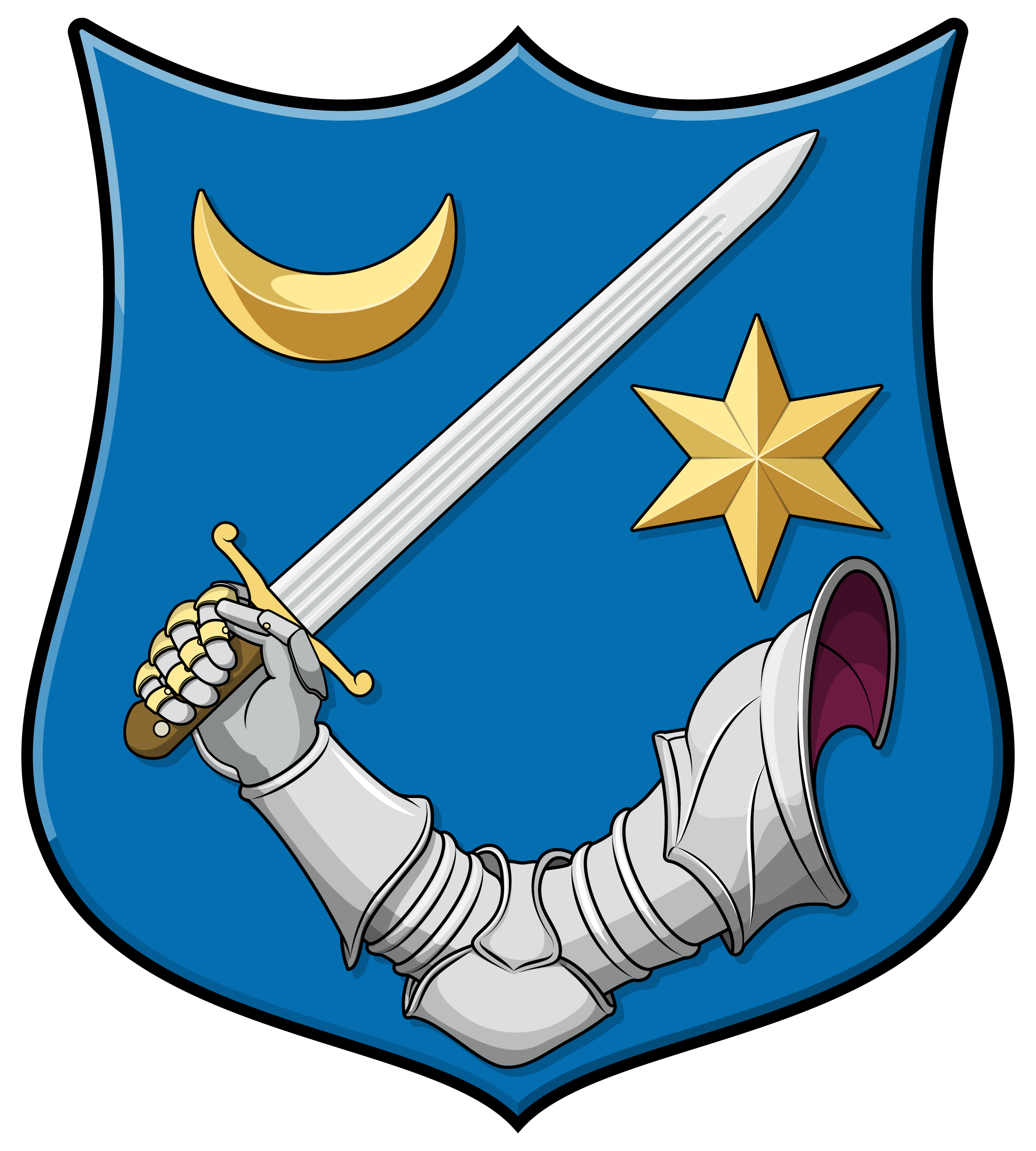
Coat of arms of Nagyvázsony
Lokáció:
Típus:
Jogállás:
Nagyvázsony
(German: Großwaschon) is a village in Veszprém County, within the Veszprém District. It is situated in the Transdanubian Mountains, at the southern foothills of the Bakony and on the northern edge of the Balaton Highlands, in the center of the Vázsony Basin. Its geographical position and strategic importance have determined its significance since the Middle Ages. Covering an area of 7,629 hectares, it is the second-largest village by administrative territory in Veszprém County.
Geography
The settlement lies along the road connecting Veszprém and Tapolca. From a geographical perspective, it is located at the meeting point of the Bakony Mountains and the Balaton Highlands, at an average elevation of 200–250 meters above sea level. The geological foundation of the area consists mainly of Triassic limestone and dolomite, covered in places by Quaternary sediments and basalt tuff deposits. The main watercourse of the region is the Vázsonyi Stream.
History of Nagyvázsony
Antiquity and the Early Middle Ages
The area was already inhabited during Roman times, as evidenced by archaeological finds discovered nearby, including remains of Roman roads and traces of villa estates. Following the Hungarian Conquest, the region became the estate center of the Lőrente clan.
The Middle Ages and the Age of Kinizsi Pál
The golden age of the settlement dates to the 15th century.
Castle construction:
The core of the present-day castle was built by the Vezsenyi family at the turn of the 14th and 15th centuries.
Pál Kinizsi:
After the extinction of the Vezsenyi family, King Hunyadi Mátyás granted the estate to Pál Kinizsi in 1472. Kinizsi initiated extensive construction works, enlarging the castle and adding a palace wing and outer defensive structures.
Religious life:
In 1483, Kinizsi and Balázs Magyar founded the Pauline monastery, which became one of the workshops of late medieval Hungarian book culture. Among other works, the famous Festetics Codex was created here.
Early Modern and Modern Period
During the Ottoman occupation, Nagyvázsony functioned as a border fortress and retained its strategic importance as part of the Balaton Highlands defensive line. From the mid-17th century onward, the Zichy family became the owners of the estate. In the 18th century, they built a Baroque mansion and settled a significant German-speaking population in the area, shaping the later ethnic and economic character of the settlement.
Coat of Arms of Nagyvázsony
The coat of arms of Nagyvázsony belongs to the type of Hungarian municipal heraldry that adopts the arms of a historical family — in this case, the Kinizsi family — thereby emphasizing the historical continuity and identity of the community.
As early as the 19th century, the village used the “Kinizsi coat of arms” on its official seals. In 1994, when the municipal decree concerning the coat of arms was adopted, the settlement once again elevated the well-known arms of Pál Kinizsi to the rank of the official municipal coat of arms.
The shield is a blue drum-shaped shield, slightly pointed at the base. It depicts a bent armored arm holding a straight sword. In front of the sword appears a crescent moon, while a six-pointed star is placed between the arm and the sword. The crescent is located in the upper right part of the shield, while the star is positioned in the center.
Main Sights
- Kinizsi Castle
- Saint Michael Monastery
- Saint Stephen Church
- Zichy Mansion
Original image source: Nemzetijelkepek.hu
Source: Google Gemini

The visual content of this website may be freely used under the terms of the Creative Commons 4.0 license, provided that the source is clearly indicated and the attribution includes a full, clickable link to https://cimerek.hu or to the exact web address of the specific content.