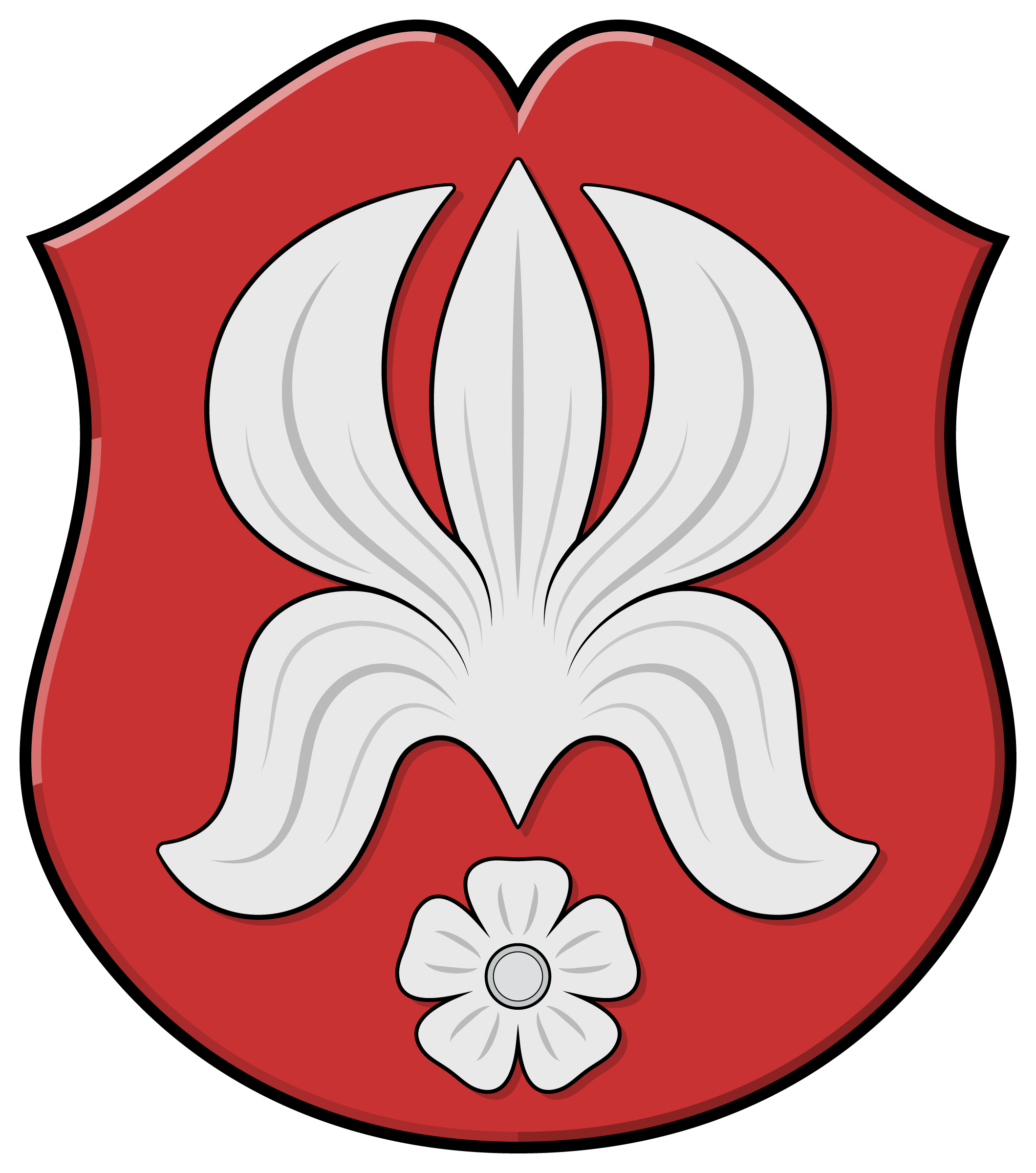
Coat of arms Mezőtúr
Location:
Type:
Status:
Mezőtúr
Mezőtúr is a town located in eastern Hungary, on the southern edge of the Nagykunság region, within Jász-Nagykun-Szolnok County. It has a long history as a market town, which significantly shaped its development from the Middle Ages onward.
The area has been inhabited since prehistoric times, but Mezőtúr itself was granted market town privileges in 1378 by King Louis I of Hungary (Louis the Great).
Its geographical position favored trade, as it lay along an important route between Buda and Transylvania. This contributed to the development of fairs and crafts, and by the 15th–16th centuries, the fairs of Mezőtúr had gained national importance, making the town a regional economic center.
The Reformation reached the town early, and Mezőtúr became an important center of education. In later centuries, craftsmanship—especially pottery—became a defining feature of the town, a tradition that continues to this day.
History of Mezőtúr
The development of the town spans several historical periods:
- Middle Ages: acquisition of market town privileges and rise as a trade center
- Ottoman period: continued importance of fairs and commerce
- Early modern period: strong craft industry and educational role
- 19th–20th centuries: industrialization reduced the role of traditional crafts, but the town retained its regional significance. By the late 19th century, Mezőtúr had become one of the most important pottery centers of the Great Hungarian Plain, a legacy that still forms part of its identity today.
The Coat of Arms of Mezőtúr
Description
The coat of arms of Mezőtúr features a red shield with a rounded base, displaying:
- a silver (white) fleur-de-lis,
- and below it, a silver five-petaled rose.
The composition is simple yet distinctive, reflecting a long-standing heraldic tradition.
Origin and Symbolism
The central motif, the fleur-de-lis, is most likely a reference to the emblem of the Angevin dynasty, and thus linked to King Louis I, who granted the town its privileges.
The rose appears as a secondary element, commonly symbolizing beauty, life, or local traditions in heraldry.
A notable feature of the coat of arms is its historical continuity: with minor interruptions, it has been in use since the 14th century, which is relatively rare among Hungarian municipal symbols.
Original image source: Nemzetijelkepek.hu
Source: ChatGPT

The visual content of this website may be freely used under the terms of the Creative Commons 4.0 license, provided that the source is clearly indicated and the attribution includes a full, clickable link to https://cimerek.hu or to the exact web address of the specific content.