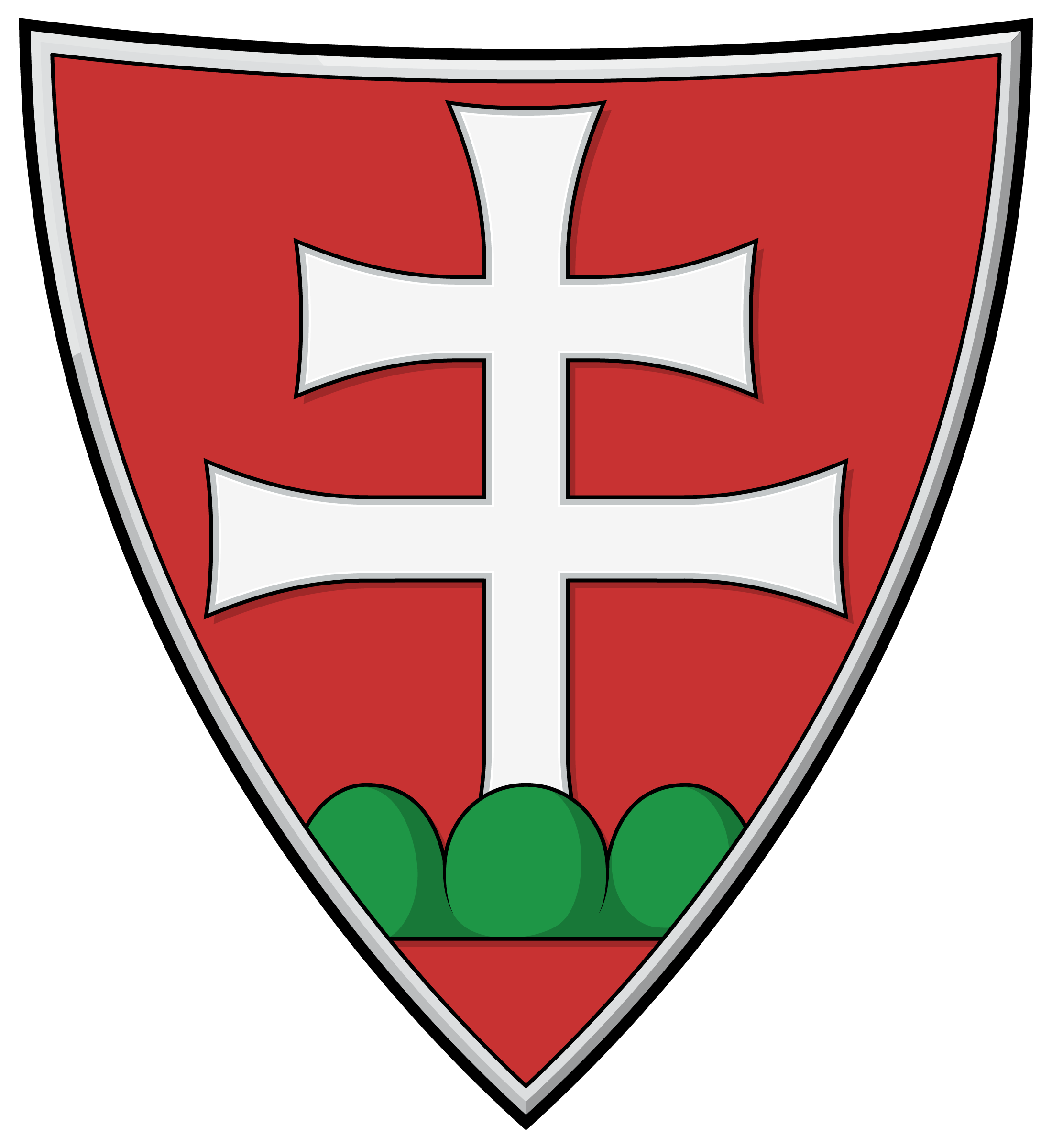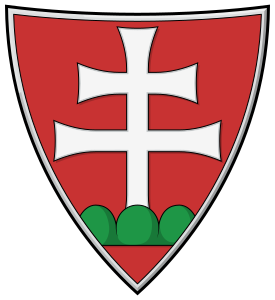
Coat of arms of King Otto of Hungary
Name:
Epithet:
Country:
Title:
Dynasty:
Reign:
Otto of Wittelsbach, King of Hungary
Otto of Wittelsbach (1261 – 9 March 1312) was a short-reigning but historically significant ruler of the medieval Kingdom of Hungary. A member of the Wittelsbach dynasty, he came from a Bavarian ducal family and, through his mother, also had Árpád-dynasty blood. His reign lasted from 1305 to 1307, and despite its brevity, it clearly demonstrated the weakness of royal authority and the internal divisions of the country. Although his accession to the throne raised great hopes, his rule failed to bring stability to Hungary.
Coat of arms redrawn on the basis of the seal.
Family Background and Claim to the Throne
Otto’s father was Duke Louis II of Bavaria, and his mother was Elizabeth of the Árpád dynasty, daughter of King Béla IV of Hungary. As a result, the young Bavarian duke could lay claim to the Hungarian throne after the extinction of the Árpád dynasty. With the death of King Andrew III in 1301, the male line of the Hungarian royal house came to an end, triggering a succession crisis. Several European ruling houses asserted claims to the crown: alongside the Přemyslids of Bohemia, the Angevins, and the Habsburgs, the Wittelsbachs also entered the contest.
The Hungarian nobility was divided. Some sided with Otto, regarding him as a legitimate heir because of his Árpád lineage. Others supported Charles Robert of the Angevin house, or favored King Wenceslaus of Bohemia.
Accession to the Throne and the Acquisition of the Holy Crown
Amid the struggles for the throne, Otto arrived in Hungary in 1305, and a faction of the magnates elected him king. He was crowned with the Holy Crown on 10 November 1305 in Székesfehérvár. The crown itself was obtained in a special manner: Queen Elizabeth, widow of King Andrew III, handed it over to him, thereby acknowledging his claim.
After the coronation, the Bavarian duke formally became ruler of Hungary, but his actual power was limited. The provincial lords—among them Matthew Csák, Amade Aba, and Henry Kőszegi—ruled their territories virtually independently. Central royal authority remained weak, and Otto proved unable to curb feudal anarchy.
Struggles and Failures
The young ruler attempted to consolidate his power but encountered resistance on several fronts. The Angevin party supported Charles Robert, who strengthened his claim with papal approval. Otto, by contrast, relied mainly on his German and Bavarian relatives and on a handful of Hungarian magnate allies. Although he initially managed to retain the crown, his position became increasingly untenable.
In 1307 he was captured by Matthew Csák, who seized him under the pretext of hospitality at Gombaszög. Although Otto was released shortly afterward, his authority was irreparably undermined. By this time, most of the magnates regarded Charles Robert of the Angevin house as the true claimant to the throne. The Bavarian-born king lost the political struggle and was forced to leave the country.
Withdrawal and Death
After renouncing the Hungarian throne, Otto returned to Bavaria. For a short time he continued to use the title “King of Hungary,” but in reality he exercised no authority in the Carpathian Basin. He spent the remaining years of his life at the Bavarian court and died on 9 March 1312 in Landshut. After his death, the Wittelsbach dynasty no longer played a significant role in the Hungarian succession struggles.
Assessment and Legacy of Otto of Wittelsbach
The figure of Otto of Wittelsbach is less well known in Hungarian history than that of his contemporaries, yet his reign aptly illustrates the complexity of the succession disputes following the extinction of the Árpád dynasty. Although he claimed the crown as a descendant of the Árpáds, his personal abilities and political weight proved insufficient to secure lasting power. His reign was rather a transitional episode that helped pave the way for the rise of Charles Robert.
According to historiography, Otto represents more a symbol of dynastic connections than a major political figure. His brief rule also highlighted that in medieval Hungary, the support of the magnates and papal legitimacy were far more important than the personal qualities of the king. Although he left little tangible mark as a ruler, his person nonetheless forms part of the rich and eventful history of the Hungarian Middle Ages.
Original image source: Internet
Text source: ChatGPT
The visual content of this website may be freely used under the terms of the Creative Commons 4.0 license, provided that the source is clearly indicated and the attribution includes a full, clickable link to https://cimerek.hu or to the exact web address of the specific content.