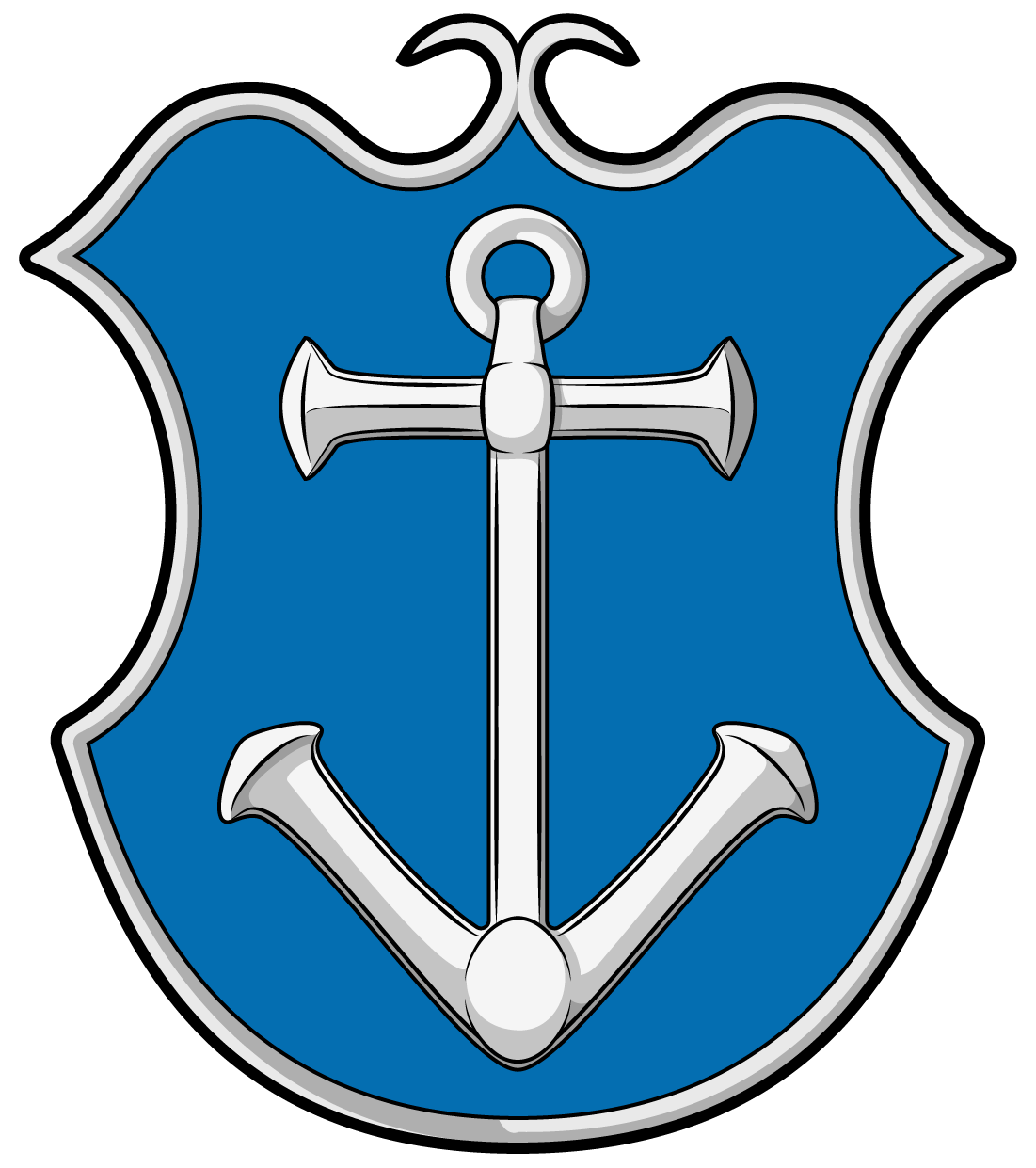
Coat of arms of Hájniky
Location:
Type:
Status:
Hájniky
(Hungarian: Hajnik) is a district of the town of Sliač; until 1960 it was an independent municipality in Slovakia, in the Banská Bystrica Region, Zvolen District.
The coat of arms was redrawn on the basis of the original seal.
Location
Hajnik is the western district of Sliač, situated on the right bank of the Hron River, and is built together with Garamhalászi. It is the largest of Sliač’s three cadastral areas, with an area of 25.62 km².
History of Hájniky
A Slavic settlement already existed on the site of the village in the 6th century.
The village is first mentioned in 1250 under the name Villa Custodum silvarum. Its church, dedicated to Saint Nicholas the Bishop, is mentioned as early as 1263. From the 14th century, it belonged to the Zvolen castle estate. Around 1550, the inhabitants of the village became Lutheran. Between 1582 and 1657, it paid taxes to the Ottomans. In 1621, the Bezegh family became co-owners of the settlement (they received their armorial charter in 1617). In 1626, the village was burned down by the Ottomans. In 1675, the parish was returned to the Catholics; from then on, the Protestant inhabitants attended services in nearby Garamszeg.
At the end of the 18th century, András Vályi described the village as follows:
“HAJNIK. A Slovak village in Zólyom County, its landlord the noble House of Esterházy; its inhabitants are Catholics. It lies by the waters of the Hron and is adorned with the lord’s castle. Its lands are often flooded by the Hron; it has sufficient pasture, its soil is flat and fertile, it has wood for fuel and construction, and it is not far from the markets of Zólyom, Selmec, and Körmöcbánya.”
In 1828, 461 inhabitants lived in 63 houses, mainly engaged in agriculture and the pottery trade.
In his geographical dictionary published in 1851, Elek Fényes wrote of the village:
“Hajnik, a Slovak village in Zólyom County, by the Hron River, a 20-minute distance from the spa of Sliač, in a fertile and pleasant landscape; 132 Catholics and 329 Lutherans. Catholic parish church. Landowner: the Chamber. Post station: Bucsa.”
In 1876, a fire destroyed the entire settlement. In 1910, it had 696 inhabitants, mostly Slovak, with a significant Hungarian minority. Until the Treaty of Trianon, it belonged to the Zvolen District of Zólyom County.
In 1960, it was merged with Garamhalászi under the name Sliač.
Sights
- The Gothic Church of Saint Nicholas, already standing in 1263; a two-nave church with a three-sided apse and 15th-century architectural details.
- A two-storey manor house built in the 15th–16th centuries.
Source: Wikipedia
The visual content of this website may be freely used under the terms of the Creative Commons 4.0 license, provided that the source is clearly indicated and the attribution includes a full, clickable link to https://cimerek.hu or to the exact web address of the specific content.