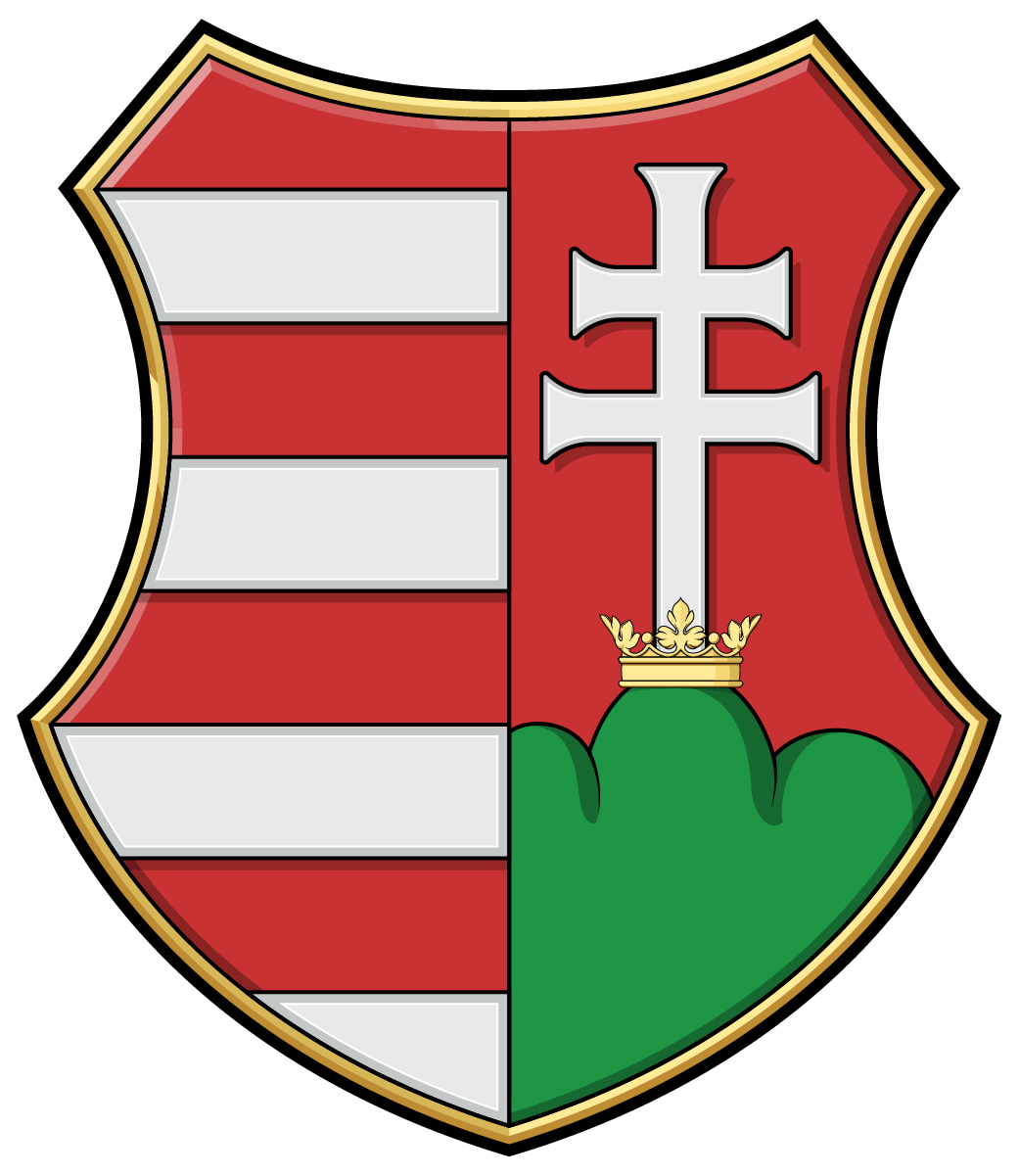
Kossuth Coat of Arms
Location:
Type:
Grantor:
Year:
The Evolution of the Kossuth Coat of Arms
In September 1848, the form of government in Hungary was unquestionably a monarchy. However, the change of monarch in early December of that year—namely the abdication of Ferdinand V and the accession of Franz Joseph I, which the Hungarian side deemed illegal—created a complex legal and political situation.
It was during this time that the coat of arms stripped of its crown became the symbol of contemporary Hungarian republican circles, emerging within the columns and on the masthead of their radical newspaper, Marczius Tizenötödike(March 15th).
The History of the Crownless Coat of Arms and the Role of Kossuth
Initially, Lajos Kossuth explicitly opposed removing the Holy Crown from the national symbol. In a sworn statement in 1861, he argued that the Hungarian crown was the most vital part of the coat of arms, belonging to the nation rather than the king.
Nevertheless, following the Declaration of Independence in Debrecen on April 14, 1849—which dethroned the House of Habsburg-Lorraine—the crownless coat of arms was officially put into use. This period also saw the introduction of the distinctive shield shaped with inward-curving top edges (known as the lyre shield). Furthermore, during his subsequent exile, Kossuth predominantly issued banknotes (the so-called “Kossuth banknotes”) featuring this crownless emblem.
However, a republican form of government was never officially proclaimed in 1849; instead, Kossuth exercised head-of-state powers as Governor-President. Consequently, rather than a change in the form of government, this heraldic shift symbolized the absence of a legitimate monarch, national sovereignty, and the break from the dynasty. The term “Kossuth coat of arms” was only used for the first time in official legislation much later, under Act I of 1946, which proclaimed the Republic of Hungary.
Source: Veritas
The visual content of this website may be freely used under the terms of the Creative Commons 4.0 license, provided that the source is clearly indicated and the attribution includes a full, clickable link to https://cimerek.hu or to the exact web address of the specific content.