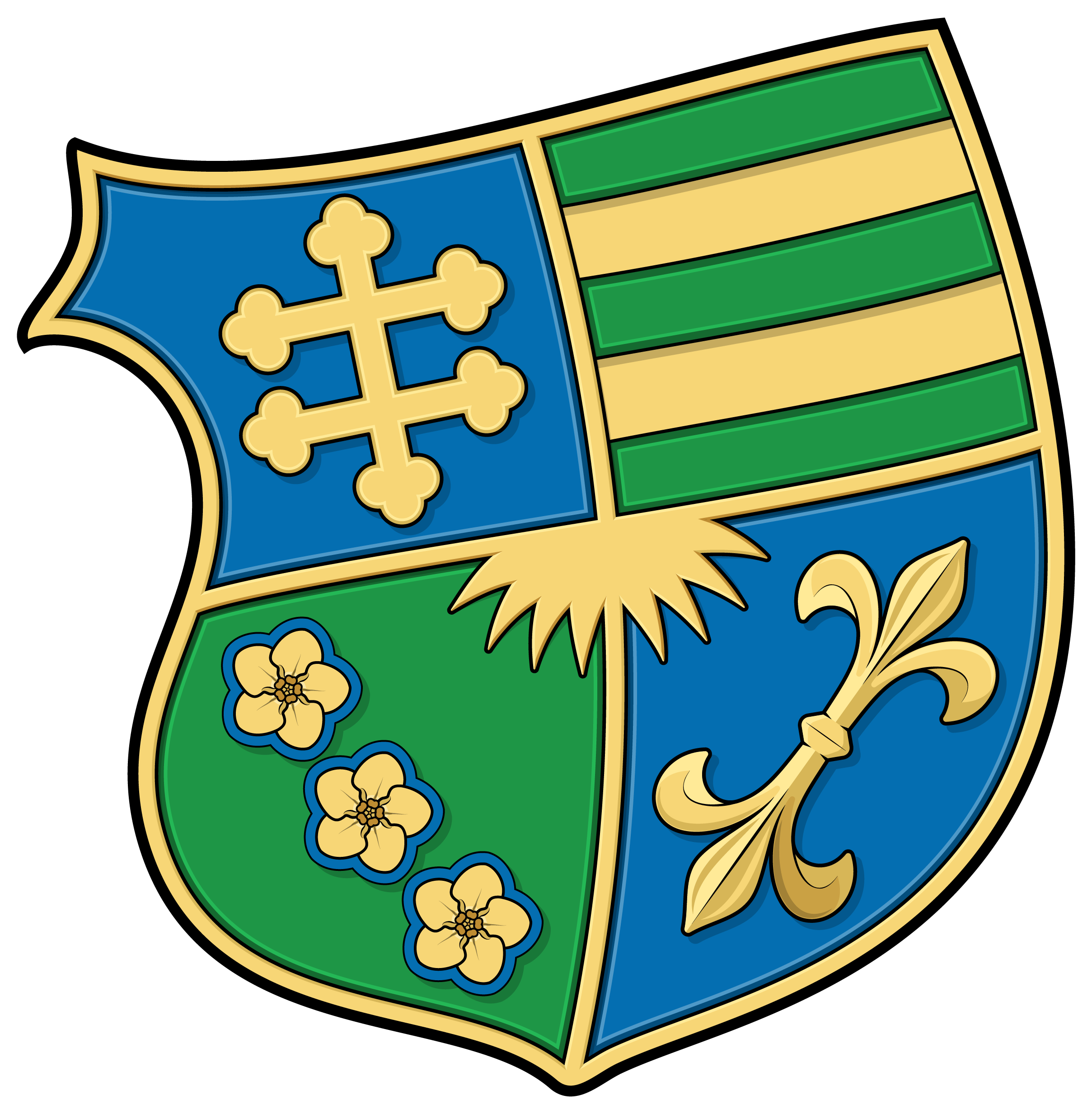
Coat of Arms of Stephen III of Moldavia
Name:
Epithet:
Country:
Title:
Dynasty:
Reign:
Stephen III (the Great)
(Romanian: Ștefan cel Mare)
(Borzești, 1433 – Suceava, 2 July 1504)
Stephen III was Prince of Moldavia from 1457 to 1504. During his long reign, Moldavia developed into a strong and resilient state and preserved its independence against the Kingdom of Hungary, Poland, and the Ottoman Empire.
He fought 36 battles and won 34 of them. His most famous victories include the Battle of Baia and the Battle of Vaslui (1475). After the latter, Pope Sixtus IV praised him as the verus christianae fidei athleta (“true champion of the Christian faith”). His religious devotion was further demonstrated by paying the Ottoman debts of the monasteries of Mount Athos to preserve their autonomy.
Stephen was widely admired by contemporaries for his military skill and heroism. King Matthias Corvinus of Hungary and Venetian envoys praised him as a defender of Christianity. According to the Venetian physician Muriano, Stephen himself stated shortly before his death that he had fought 36 battles, losing only two.
Accession to Power
Stephen belonged to the Mușat dynasty. His father, Prince Bogdan II of Moldavia, was killed in 1451 by his brother Peter Aaron. After years of internal conflict, Stephen sought support from John Hunyadi in Transylvania and later from Vlad III of Wallachia.
In 1457, with an army of about 6,000 cavalry, Stephen defeated Peter Aaron at Doljești, drove him into exile, and was proclaimed prince of Moldavia.
Reign of Stephen III
Stephen strengthened his rule by reclaiming key territories and fortresses, including Chilia. In 1467 he defeated King Matthias Corvinus at the Battle of Baia, where the Hungarian king was wounded. Despite later diplomatic concessions, Stephen remained a decisive regional power.
His greatest victory came in 1475 at Vaslui, where he defeated a vastly superior Ottoman army. Although Sultan Mehmed II personally led a major campaign against Moldavia in 1476, the Ottomans failed to capture Suceava and were forced to withdraw.
Stephen skillfully balanced diplomacy and warfare between Hungary, Poland, and the Ottoman Empire. In 1486 he accepted Ottoman suzerainty in exchange for internal autonomy, a status later inherited by the Moldavian Principality.
Conflicts with Poland and Later Years
Relations with Poland deteriorated in the 1490s, culminating in the failed Polish invasion of Moldavia in 1497. Stephen decisively defeated King John I Albert’s forces at the Battle of the Cosmin Forest.
In his later years, Stephen focused on reconstruction, fortification, and religious foundations. He strengthened major fortresses such as Suceava, Neamț, and Hotin.
Death and Legacy
Stephen III died on 2 July 1504 and was buried at the Putna Monastery, which he founded. During his reign, he established numerous monasteries and churches in Bukovina, many of which are now UNESCO World Heritage Sites.
Shortly after his death, he was venerated as a saint. The Romanian Orthodox Church canonized him as Saint Stephen the Great and Holy (Sfântul Voievod Ștefan cel Mare).
Source of original image: Internet
Text source: ChatGPT
The visual content of this website may be freely used under the terms of the Creative Commons 4.0 license, provided that the source is clearly indicated and the attribution includes a full, clickable link to https://cimerek.hu or to the exact web address of the specific content.