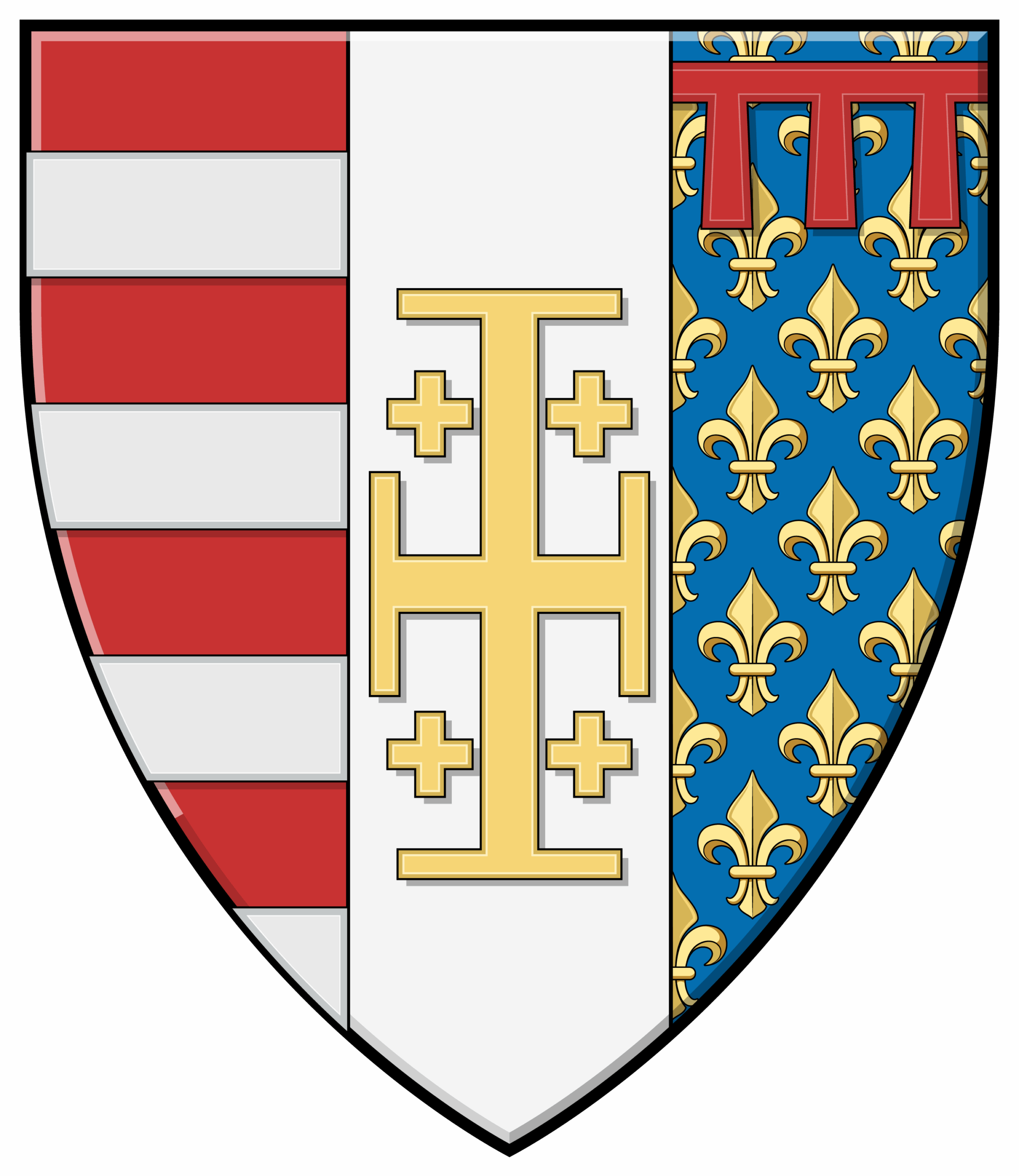
Coat of arms of King Charles II of Hungary
Name:
Epithet:
Country:
Title:
Dynasty:
Reign:
Charles II, King of Hungary and Naples
(1345 – 24 February 1386) was a member of the House of Anjou, King of Naples (as Charles III) and, for a brief period, King of Hungary. In Hungarian sources he is often referred to as “Charles the Short” (Kis Károly).
He spent part of his childhood at the Hungarian royal court alongside his uncle, King Louis I “the Great,” which forged strong personal ties to Hungary. After Louis’s death in 1382, the Hungarian estates supported his daughter, Queen Mary, but internal conflict soon arose over the succession. During the political crisis of 1385, Charles was summoned from Naples and was lawfully crowned King of Hungary on 31 December 1385 in Székesfehérvár.
His reign, however, proved extremely short. Queen Dowager Elizabeth and her supporters conspired against him. On 7 February 1386, he was wounded at the castle of Visegrád and died from his injuries a few weeks later, on 24 February 1386. After his death, the struggle for the Hungarian throne continued for several more years.
His coat of arms combines the arms of Hungary, Jerusalem, and Naples.
The Significance of Charles II
Although his rule in Hungary lasted barely two months, it clearly illustrates the complexity of the late 14th-century struggles for the throne and competing dynastic interests. His figure is associated with one of the shortest and most tragic reigns in Hungarian history.
Original image source: Internet
Text source: ChatGPT
The visual content of this website may be freely used under the terms of the Creative Commons 4.0 license, provided that the source is clearly indicated and the attribution includes a full, clickable link to https://cimerek.hu or to the exact web address of the specific content.